Descrizione Clinica
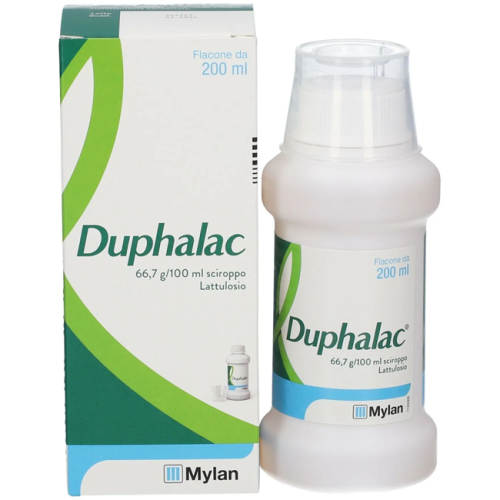
Laxatives Lattulosio abc scir 180ml66,7% Abc Pharmaceuticals
LATTULOSO ABC 66,7 G / 100 ML SCIROP
active ingredients
100 ml of syrup contain: Active ingredient: liquid lattulose 66,7 g Excipients with known effects: benzoate sodium For the full list of excipients see paragraph 6.1Excellent
Syrup: sodium benzoate, purified waterTherapeutic indications
Treatment of short duration of occasional constipation in adult and child.Contraindications
Hypersensitivity to the active ingredient or any of the excipients listed in the paragraph 6.1. Acute or unknown abdominal pain, nausea or vomiting, obstruction or intestinal stenosis, rectal bleeding of unknown origin, severe dehydration status, digestive tract perforation or digestive tract perforation risk.Population
Population| Patients | Daily initial dose | Daily maintenance costs |
| Adults and teenagers | 15-45 ml (corresponding to 10 - 30 g lattulose) | 15-30 ml (corresponding to 10 - 20 g of lattulose) |
| Children (7-14 years) | 15 ml (corresponding to 10 g of lattulose) | 10-15 ml (corresponding to 6,67 - 10 g lattulose) |
| Children (1-6 years) | 5-10 ml (corresponding to 3,33 - 6, 67 g lattulose) | 5-10 ml (corresponding to 3,33 - 6, 67 g lattulose) |
| Children under 1 year | 2.5 to 5 ml (corresponding to 1,66 - 3, 33 g lattulose) | 2.5 to 5 ml (corresponding to 1,66 - 3, 33 g lattulose) |
Conservation
This medicine does not require any special condition of conservation.Warnings
Warnings Laxative abuse (frequent or prolonged use or excessive doses) can cause persistent diarrhea resulting in water loss, mineral salts (especially potassium) and other essential nutrients. Therefore the condition of hydration of the patient must be carefully evaluated. In the most serious cases, dehydration or hypopotassiemia may occur, which may lead to cardiac or neuromuscular dysfunctions, especially in the case of a contemporary treatment with cardiac, diuretic or corticosteroid glucosides. The abuse of laxatives, especially those of contact (stimulating laxatives), can cause dependence (possible need to gradually increase the dosage), chronic constipation and loss of normal intestinal functions (intestinal atonia). Precautions of employment Before starting the treatment, an eventual abdominal painful symptomatology of unknown cause must be evaluated in order to exclude undiagnosed perforations or obstructions or related undiagnosed predisposable pathologies/conditions. In case of insufficient therapeutic effect after 2-3 days the additional dose and/or measures must be reconsidered. You should consider that the evacuation reflex can be altered during treatment. Lattulose ABC contains galactose and lactose. Patients with rare hereditary problems of galactose intolerance, e.g. galactosemia, or glucosegalactose mal absorption, should not take this medicine. Lattulose ABC contains fructose. Lattulose ABC contains sodium benzoate This medicine contains 53 mg of benzoate sodium per dose of 45 ml. Benzoate sodium can increase jaundice (skin and eyes) in infants up to 4 weeks of age. Lattulose ABC contains sodium This medicine contains less than 1 mmol (23 mg) of sodium per dose of 45 ml, i.e. essentially ‘without sodium’.Interactions
No interaction studies have been carried out. Laxatives can reduce the time of stay in the intestine, and therefore the absorption, of other drugs administered simultaneously orally. Avoid the contemporary intake of laxatives to other medicines: after taking a medicine let spend a range of at least 2 hours before taking laxative. Wide spectrum antibiotics can reduce the bacterial flora responsible for the degradation of lattulose, with possible decrease in its therapeutic effectiveness. It is also possible to increase the activity of lattulose, if this is administered simultaneously to neomycin. In the case of a contemporary treatment with cardiac glycosides, diuretics or corticosteroid, dehydration or hypopotassium may occur, which may cause heart or neuromuscular dysfunction (see paragraph 4.4). The lowering of the pH in the intestine, characteristic of the mechanism of action of lattulose, can cause the inactivation of drugs that have a release profile dependent on the pH of the intestine (e.g. 5-ASA drugs).Effects
Summary of security profile Occasionally: insulated crampiform pains or abdominal colic pains, more frequent in cases of severe constipation and flatulence during the first days of treatment that normally disappears after a few days. Since the following reactions have been reported through spontaneous reports from an unknown population, it is not possible to estimate the frequency.| SOC MedDRA | Frequency |
| Not Note (frequency cannot be defined on the basis of available data) | |
| Gastrointestinal diseases | Flatulence, abdominal pain, nausea, vomiting, diarrhea (predominantly following excessive dosages) |
| Diagnostic examinations | Electrolytic imbalance due to diarrhea |
| Immune system disorders | Reactions from hypersensitivity |
| Pathologies of skin and subcutaneous tissue | Skin rash, itching, hives |
Overdosing
Synonyms Excessive doses can cause abdominal pain, loss of electrolytes and diarrhea. Treatment Stop the treatment or reduce the dose. The resulting losses of liquids and electrolytes must be replenished.Pregnancy
Effects are not expected during pregnancy since systemic exposure to lattulose is trascurabile.Lattulosio ABC can be used during pregnancy.Food
There are no expected effects on infant/lactant fed with breast milk since systemic exposure to lactulose for nursing women is negligible. Lattulose ABC can be used during breastfeeding.Fertility
There are no expected effects since systemic exposure to lattulose is negligible.Source: Farmadati