Descrizione Clinica
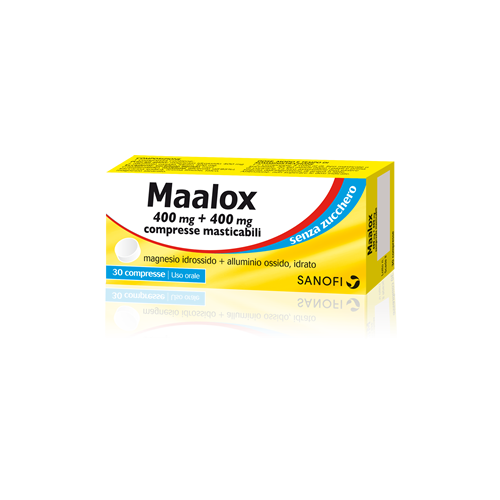
Digestives Maalox 40cpr mast 400mg+400mg Maalox
MAALOX
active ingredients
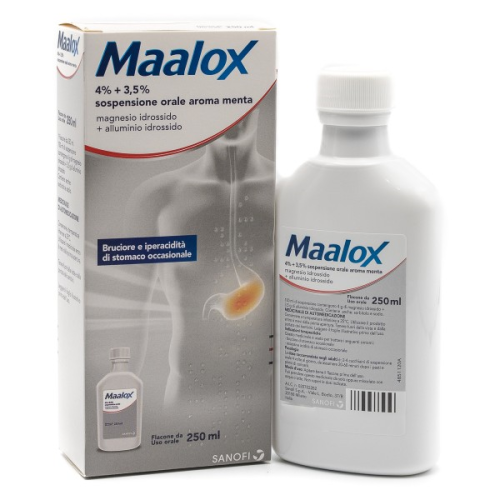
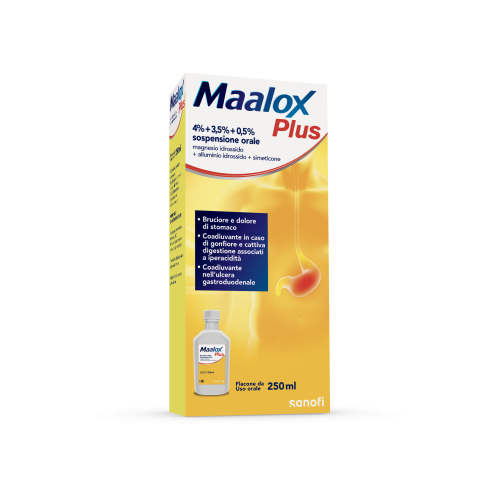
100 ml of suspension contain: - Active ingredients: magnesium hydroxide 3,65 g hydroxide aluminum 3,25 g Excipient(s) with known effects: methyl parahydroxybenzoate, propile parahydroxybenzoate, sorbitol. For the full list of excipients, see paragraph 6.1. One tablet contains: - Active ingredients: magnesium hydroxide 400 mg aluminum oxide idrate 400 mg Excipient(s) with known effects: sucrose powder with starch, sucrose, sorbitol, benzilic alcohol (contained in the excipient aroma mint powder) (see paragraphs 4.4 and 4.6). For the full list of excipients, see paragraph 6.1.Excellent
MAALOX 3,65% + 3,25% oral suspension Parahydroxybenzoate, propile parahydroxybenzoate, citric acid monohydrate, liquid sorbitol not crystallized, mannitol, mint essence, sodium saccharin, purified water. MAALOX 400 mg + 400 mg chewing tablets Sucrose powder with starch, sorbitol, mannitol, magnesium stearate, mint aroma powder (contains benzilic alcohol), sodium saccharin, sucrose.Therapeutic indications
Syntomatic treatment of burning and the hyperacidity of the occasional stomach.Contraindications
- Hypersensitivity to active ingredients or any of the excipients listed in paragraph 6.1. - Patients with porphyry. - Severe forms of kidney failure (see paragraph 4.4). - Generally contraindicated in pediatric age. - Cachesia state.Population
MAALOX 3,65% + 3,25% oral suspension Population Eating from 2 to 4 teaspoons (10-20 ml), 4 times a day, 20-60 minutes after meals and before bedtime. Method of administration Shake well before use. It can also be taken in water or milk. MAALOX 400 mg + 400 mg chewing tablets Population 1-2 tablets 4 times a day well chewed or sucked, 20-60 minutes after meals and before bedtime. Method of administration Tablets should be well chewed or sucked. Their intake may be followed by ingestion of water or milk. Pediatric population The administration of the medicinal product in pediatric age is not recommended. Do not exceed the maximum dose indicated.Conservation
MAALOX 3,65% + 3,25% oral suspension: Do not store at a temperature below 4°C. Keep the bottle closed. MAALOX 400 mg + 400 mg chewing tablets This medicine does not require any special condition of conservation.Warnings
Hydroxide aluminum can cause constipation and overdose of magnesium salts can cause hypomotility of the intestine; high doses of this medicine can cause or aggravate intestinal and ileo obstruction in patients at higher risk, such as those with kidney impairment, with basic stips, with alteration of intestinal motility, in children (from 0 to 24 months), or elderly. Hydroxide aluminium is not well absorbed by the gastrointestinal tract, and systemic effects are therefore rare in patients with normal kidney function. However, excessive doses or long-term use, or even normal doses in patients with poor phosphorus diets or in children (from 0 to 24 months), can lead to elimination of phosphate (due to an aluminum-phosphate bond) accompanied by an increase in bone reabsorption and hypercalciuria with risk of osteomalacia. It is recommended to consult your doctor in case of long-term use or in patients at risk of hypophosphateemia. In patients with renal impairment plasma levels of aluminum and magnesium tend to increase causing hyperalluminemia and hypermagnesiemia respectively. In these patients, long exposures at high doses of aluminum and magnesium salts can lead to encephalopathy, dementia, microcytic anemia or worsening of osteomalacia from dialysis. In the presence of mild and moderate forms of kidney failure it is recommended to take the product under the direct control of the doctor. In these patients, prolonged use of the medicine must be avoided. Hydroxide aluminium may not be safe in patients with porphyry under hemodialysis (see paragraph 4.3). Pediatric population In small children the use of hydroxide magnesium can lead to hypermagnesemia, especially if they have kidney damage or dehydration. MAALOX 3,65% + 3,25% oral suspension contains: • parahydroxybenzos: can cause allergic reactions (also delayed). • approximately 98 mg of i know rbitol in 10 ml (2 teaspoons). Patients with hereditary fructose intolerance should not be given this medicine. • less than 1 mmol (23 mg) of sodium by dose, that is, it is essentially “without sodium”. MAALOX 400 mg + 400 mg chewable tablets contains: • about 125 mg sorbitol per tablet. Patients with hereditary fructose intolerance should not be given this medicine. • Sucrose, patients with rare hereditary problems of fructose intolerance, glucose-galactose mal absorption, or isomaltase sucrasis failure, should not take this medicine. • less than 1 mmol (23 mg) of sodium by dose, that is, it is essentially “without sodium”. • 0.000072 mg of alcohol benzig per tablet. Benzyl alcohol may cause allergic reactions. • Large volumes should be used with caution and only if necessary, during pregnancy and nursing and in patients with liver or kidney failure, due to the risk of accumulation and toxicity ( metabolic acidosis).Interactions
As Al and Mg salts reduce gastroenteric absorption of tetracyclines it is recommended to avoid taking Maalox during tetracycline therapy orally. The use of antacids containing aluminum can reduce the absorption of drugs such as H2-antagonists, atenolol, cefdinir, cefpodoxime, chlorochina, tetracycline, diflunisal, digoxin, bisphosphonate, etambutol, fluoroquinolone, sodium fluoride, glucocorticoids, indometacin, isoniazide, ketoconazole, levotiroxin, linomycin. • Sulphonate polystyrene (Kayexalate) It is recommended caution when the medicine is taken along with sulphonate polystyrene (Kayexalate) due to the potential risk of reduced resin effectiveness in binding potassium, metabolic alkalosis in patients with kidney impairment (marked with aluminum hydroxide and magnesium hydroxide), and intestinal obstruction (marked with aluminum hydroxide). • Aluminium and citrate hydroxide can cause hyperalluminemia, especially in patients with renal impairment. Allow to spend at least two hours (4 for fluoroquinolone), before taking MAALOX to avoid interaction with other drugs. The contemporary use of chinidine can determine the increase of chinidine levels in serum and lead to overdose of chinidine. The contemporary use of hydroxide and citrates can lead to an increase in aluminium levels, particularly in patients with kidney failure. Alcalinization of urine after administration of hydroxide magnesium may change the excretion of certain drugs; therefore, a greater excretion of salicylates has been observed.Effects
The frequency of the desired effects below is defined using the following conventions: common (≥1/100, Immune disorders. Frequency not known: angioedema, anaphylactic reactions, hypersensitivity reactions, hives, itching. Gastrointestinal disease. Not common: diarrhea or stipsi (see paragraph 4.4); Frequency not known: abdominal pain. Disorders of metabolism and nutrition. Very rare: hypermagnesemia, including observations after prolonged administration to patients with kidney damage; Frequency not noted: hyperalluminemia, hypophosphateemia, during prolonged use or at high doses or even at normal doses of the drug in patients with poor phosphorus diets or in children (from 0 to 24 months), which may cause an increase in bone reabsorption, hypercalciuria, osteomalacia (see paragraph 4.4). Reporting of suspicious adverse reactions The reporting of suspicious adverse reactions that occur after the authorization of the medicinal product is important, as it allows continuous monitoring of the benefit/risk ratio of the medicinal product. Healthcare workers are required to report any suspected adverse reaction via the national reporting system at: http://www.aifa.gov.it/content/segnalazioni-reazioni-avverse.Overdosing
The experience on deliberate overdose is very limited. Overdose cases with aluminum salts can occur more easily in patients with chronic severe kidney impairment with following symptoms: encephalopathy, convulsions and dementia, hypermagnesiemia. The most frequently reported symptoms of acute overdose with hydroxide aluminum and in combination with magnesium salts include diarrhea, abdominal pain and vomiting. High doses of this medicine may cause or aggravate intestinal and ileo obstruction in risky patients (see paragraph 4.4). As in all cases of overdose the treatment must be symptomatic, adopting generic support measures. Aluminium and magnesium are eliminated by urinary excretion; the treatment of overdose from magnesium provides rehydration and forced diuresis. In case of kidney failure it is necessary hemodialysis or peritoneal dialysis.Pregnancy
The medicine should only be used in case of need, under the direct control of the doctor, after evaluating the expected benefit for the mother in relation to the possible risk for the fetus or the infant.Food
Following the limited maternal absorption when taken according to the indicated posological regime (see paragraph 4.2), hydroxide aluminum and its combinations with magnesium salts are considered compatible with breastfeeding. Large volumes of benzyl alcohol must be used with caution and only if necessary during pregnancy and lactation, due to the risk of accumulation and toxicity ( metabolic acidosis) (see paragraph 4.4).Source: Farmadati