Descrizione Clinica
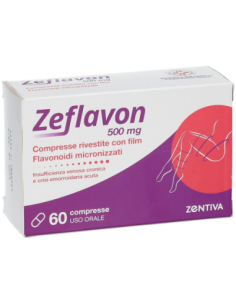
PARACETAM ZENTIVA 500 MG COMPRESENT
active ingredients
One tablet contains 500 mg of paracetamol. For the full list of excipients, see paragraph 6.1Excellent
Corn starch, sodium carboxytylaride, magnesium stearate, povidone.Therapeutic indications
Symptomatic treatment of acute painful states (headache, neuralgies, toothache, menstrual pain) and fever states.Contraindications
- Hypersensitivity to the active ingredient or any of the excipients listed in the paragraph 6.1. - Hypersensitivity to other substances closely related to chemical; in particular towards other analgesic and antipyretic. - Do not administer Paracetamol Zentiva 500 mg tablets to children.Population
Population Adults (and teenagers over 15 years): 1 tablet 3 - 4 times a day. In the most serious cases the daily dosage can be increased to 3 g (2 tablets 3 times daily). Teenagers from 13 to 15 years: 1 tablet 1 - 3 times a day. Seniors: Posology must be carefully established by the doctor who will have to assess a possible reduction of the dosages mentioned above. Method of administration For oral use. Intake of the drug must take place on a full stomach. Do not exceed the recommended doses.Conservation
This medicine does not require any special condition for conservation.Warnings
We do not recommend prolonged or frequent use. Patients should be advised not to take other medications containing paracetamol in conjunction with the risk of overdose and severe adverse reactions. High or prolonged doses of the medicinal product may cause high-risk hepatopathy and alterations to the kidney and blood. Hepatosity can occur with paracetamol even at therapeutic doses, after short-term treatment and in patients without preexisting liver dysfunction (see paragraph 4.8). Prolonged use not under medical supervision may be harmful. In rare cases of allergic reactions, administration must be suspended and appropriate treatment must be established. Do not administer for more than 3 consecutive days without consulting your doctor. In subjects with glucose-6-phosphate-dehydrogenase deficiency, in case of kidney or liver failure and in old age the product should be used only after consulting the doctor. Carefully administer subjects with kidney or liver failure. Paracetamol must be administered with caution to patients with moderate to severe renal impairment, hepatocellular insufficiency from mild to moderate (including Gilbert syndrome), severe liver failure (Child-Pugh > 9), acute hepatitis, concomitant treatment with medications that alter liver function, low glutathione reserves, glucose-6-phosphate deficiency. Strict skin adverse reactions (SCAR): The life-threatening skin reactions of Stevens-Johnson syndrome (SJS) and toxic epidermal necrolysis (TEN) have been reported with the use of paracetamol. Patients must be warned of signs and symptoms and carefully monitored for skin reactions. If symptoms or signs of SJS and TEN occur (e.g. progressive skin rashes often with blisters or mucosa lesions), patients must immediately stop the Zentiva Paracetamol treatment and consult a doctor. In patients with sensitivity below acetylsalicylic acid and/or non-steroidal anti-inflammatory drugs (NSAID) it is recommended attention. Invite the patient to contact the doctor before associating any other medication (See also paragraph 4.5 “Interactions with other medicines and other forms of interaction”). Do not use for protracted treatments.Interactions
The oral absorption of the paracetamol depends on the speed of gastric emptying. Therefore, the concomitant administration of medicines that slow down (e.g. anti-linergic, opioid) or increase (e.g. procinetic) the rate of gastric emptying can determine respectively a decrease or increase of the bioavailability of the medicinal product. Paracetamol absorption speed can be increased by metoclopramide or domperidone and absorption can be reduced by choleramine. Taking cholesteramine and paracetamol must take place within an hour to achieve maximum effect. Concurrent use of paracetamol with oral anticoagulants can induce slight variations in INR values. The anticoagulant effect of warfarin, other cumarinics and other antivitamin drugs K can be enhanced by the regular and prolonged use of paracetamol with an increase in the risk of bleeding. The effect can already occur at daily doses of 1.5-2 g paracetamol for 5-7 days. Occasional doses have no significant effect. Patients taking paracetamol and an antivitamin K must be monitored for complications related to clotting and bleeding. In these cases a more frequent monitoring of INR values should be conducted during concurrent use and after its interruption. The simultaneous administration of flucloxacillin with paracetamol can lead to metabolic acidosis, particularly in patients with risk factors of glutathione depletion, such as sepsis, malnutrition or chronic alcoholism. Chelante-function resin can reduce the intestinal absorption of paracetamol and potentially decrease its effectiveness when taken simultaneously. In general, if possible, there must be a range of more than 2 hours between resin intake and paracetamol intake. Contemporary intake of paracetamol and chloramphenicol can lead to an increase in the half-life of chloramphenicol, with the risk of increasing its toxicity. It is recommended to monitor the plasma levels of chloramphenicol in case of paracetamol association with an injectable chloramphenicol treatment. Salicylamide can prolong the half-life of paracetamol elimination. Paracetamol can decrease the bioavailability of lamotrigine, with a possible reduction of its effects, due to the potential induction of its metabolism at a liver level. The risk of paracetamol toxicity can be increased in patients who receive other potentially hepatotoxic drugs or drugs that induce liver microsomal enzymes such as some antiepileptics (such as phenobarbital, phenytoin, carbamazepine, topiramato, glutethymide), rifampin, isoniazide, cimetidine, San Giovanni herba use. Induced metabolism causes a high production of hepatotoxic oxidative metabolite of paracetamol. Hepatosity occurs if this metabolite exceeds the normal glutathione binding capacity. Therefore, caution must be exercised in case of concurrent intake of enzymatic inductors (see paragraph 4.9). The same applies in cases of ethylism and in patients treated with zidovudine. In case of concurrent treatment with probenecid, it is necessary to consider a reduction of the dose because probenecid halves almost the clearance of the paracetamol through the inhibition of its conjugation with glucuronic acid. Interference with laboratory analysis Paracetaminol administration may interfere with the determination of uricemia (by the method of phosphotungstic acid) and glycemia (by the method of glucose-oxidase-peroxidase).Effects
The frequency of unwanted effects was classified as follows: very common (≥1/10), common (≥1/100,Overdosing
With paracetamol there is a risk of intoxication, especially in elderly people, small children, patients with liver disease, in cases of chronic alcoholism, patients with chronic malnutrition and patients treated with enzymatic inductors. Overdose can be lethal. Synonyms Symptoms of paracetamol poisoning are nausea, vomiting, anorexia, pallor and abdominal pain. These symptoms usually occur within 24 hours of intake. A paracetamol overdose with 7.5 grams or more in a single administration in adults, or 140 mg/kg body weight in a single administration in children, causes hepatic cytolysis that can induce gastrointestinal bleeding, complete and irreversible necrosis, which involves hepatocellular insufficiency, metabolic acidosis and encephalopathy, which can lead to death. At the same time, the increase in levels of hepatic transaminasis (AST, ALT), hydrogenase lactate and bilirubin as well as the reduction of protrombine levels, which could occur from 12 to 48 hours after acute overdose. Clinical signs of liver damage are usually evident initially after two days and reach their maximum expression after 4-6 days. Even in the absence of severe liver damage, acute kidney failure with renal tubular necrosis may occur. Other non-hepatic symptoms after overdose of paracetamol may be myocardial abnormalities, pancitopenia and pancreatitis. Emergency treatment Despite the lack of significant early symptoms, patients must be promptly addressed to the hospital for immediate medical evaluation. The measures include gastric emptying by suction and gastric lavender preferably within four hours of ingestion. It is recommended to determine the plasma concentration of the paracetamol that should be measured at four hours or more, after ingestion (previous concentrations are unreliable). When a paracetamol intoxication is suspected, the intravenous administration of donors of groups -SH N-acetylcysteine is indicated, within 10 hours of ingestion. Although treatment with N-acetylcysteine is more effective if started within the specified period, it can still offer a certain degree of protection if administered within 48 hours of ingestion. In this case, it is used for more time. Posology is 150 mg/kg e.v. in glucosated solution in 15 minutes, then 50 mg/kg in the next 4 hours and 100 mg/kg in the following 16 hours, for a total of 300 mg/kg in 20 hours. Further measures will depend on the severity, nature and course of clinical symptoms of paracetamol intoxication and must follow standard protocols of assistance.Pregnancy A large amount of data on pregnant women do not indicate neither malformative toxicity, nor fetal / neonatal toxicity. Epidemiological studies on neurological development in children exposed to paracetamol in uterus show non-conclusive results. If clinically necessary, paracetamol can be used during pregnancy, however it should be used at the lowest effective dose for as short as possible and with the lowest frequency possible. Food After oral administration, paracetamol is excreted in breast milk in small amounts not clinically significant. No side effects have been reported. Paracetamol can be used by women breast-feeding, provided the recommended dosage is not exceeded. Precaution for long term use.
Source: Farmadati