Descrizione Clinica
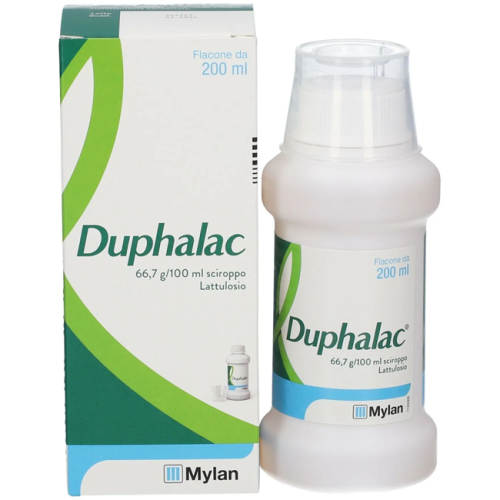
Laxatives Portolac scir fl 200ml 66,67g Portolac
PORTOLAC
active ingredients
Portolac 200 g oral powder Each jar contains 200 g monohydrate lattitol. Portolac 5 g powder for oral solution Each sachet contains 5 g monohydrate lattitol. Portolac 10 g powder for oral solution Each sachet contains 10 g monohydrate lattitol. Portolac 66,67 g/100 ml syrup 100 ml syrup contain 66,7 g monohydrate lattitol For the full list of excipients see paragraph 6.1.Excellent
Powder for oral solutionNo one. Syrup: benzoic acid; hydroxide sodium; purified water.Therapeutic indications
Portolac is indicated in the short-term treatment of occasional constipation.Contraindications
Hypersensitivity to lactyl or any of the excipients listed in paragraph 6.1. Portolac produces its effect in the colon and is therefore contraindicated in all cases where intestinal transit is not insured (intestinal occlusion etc.). As with all laxatives, Portolac should not be used in case of any symptoms or suspicion of organic injury of the digestive tract and in case of any abdominal pain of unknown origin or rectal bleeding. The fecaloma should be treated in another way before using laxatives. Breasted children and children with autosomal hereditary intolerance to fructose. Portolac is contraindicated in galactosemia. The incomplete metabolism of lactyl can lead to the development of fructemia and galactosemia and their sequels. Pre-existing hydro-electronic imbalance.Population
Adults Powder for oral solution: 10–15 g of Portolac per day, equal to 2–3 scoops of 5 g powder per oral solution, 2–3 sachets of 5 g or 1 bag of 10 g, in one administration, preferably in the evening before bedtime. Syrup : 15–30 ml PORTOLAC syrup per day (corresponding to 1–2 misurini dosatori filled up to the 15 ml notch) in one administration, preferably the evening before bedtime. Pediatric population Children Powder for oral solution The Portolac must be taken in one administration, in the morning with breakfast: from 2 to 6 years, 5 g per day, i.e. a measurino of 5 g powder per oral solution or a 5 g sachet; over 6 years, 5–10 g per day, equal to 1–2 scoops of 5 g oral powder, 1–2 sachets of 5 g or 1 sachet of 10 g. Syrup Portolac syrup should be taken in one administration, in the morning with breakfast: from 2 to 6 years, 10 ml per day (equal to 1 meter filled up to 10 ml notch); over 6 years, 10–15 ml per day (equal to 1 meter filled up to 10 ml or 15 ml). Milking Powder for solution oral oral oral On average 1–2 g per day, equal to 1–2 scoops of 1 g powder per oral solution. Syrup On average, 5 ml syrup per day (equal to 1 scoop filled up to 5 ml). In general, the optimal clinical response can be achieved with dosage adjustments of 5 g of powder per oral solution per day (more or less) in the adult (equal to 1 measur of syrup filled up to the 7.5 ml notch) and 1 g oral solution powder per day in pediatric age. Portolac in the powder form for an oral solution must be dissolved in water or in other drinks (latte, tea, coffee, juice) or added to other foods such as yogurt, cooked fruit, etc. The correct dose is sufficient to produce an easy evacuation of soft feces. It is advisable to initially use the minimum doses provided. When necessary, the dose may be increased, but never exceed the maximum indicated. Laxatives must be used as frequently as possible and for no more than seven days. Use for longer periods requires the doctor’s prescription after adequate evaluation of the individual case. Eating together with an adequate amount of water (a plentiful glass). A fluid-rich diet promotes the effect of the medicine.Conservation
Portolac 5 g – 10 g powder for oral solution: Store in the original packaging to protect the medicine from moisture. Portolac 200 g powder for oral solution: do not store at temperature above 25° C. Store in the original packaging to protect the medicine from moisture. Portolac syrup: this medicine does not require any special condition of conservation.Warnings
– Avoid prolonged use of laxatives without interruption; – All cases of chronic constipation must first be treated with a fiber-rich diet, sufficient fluid intake or physical activity; – To avoid alteration of the electrolytic balance caused by an overdose diarrhea, the doctor must try to determine the optimal dosage at the beginning of the treatment (see paragraph 4.2 "Posology and method of administration") to obtain a daily evacuation in patients with constipation. Senior or debilitated patients in long-term treatment with Portolac must regularly monitor their serum electrolytes. As with all laxatives, before starting treatment, a pre-existing hydro-electrolytic imbalance must be corrected. Following the treatment with Portolac, hydrogen can be accumulated in the intestine. Patients who need to undergo electrocauterization procedures must therefore perform a thorough intestinal cleansing with non-fermented solution. – Patients who complain about nausea should suggest taking Portolac during meals. – Portolac is not recommended in case of ileostomy or choleostomy. In case of particularly stubborn constipation, you should consult your doctor. Pediatric population Infants and children: Portolac should only be used if recommended by a doctor. Patients with rare hereditary problems of fructose intolerance, galactose intolerance, galactose, or glucose–galactose mal absorption, should not take this medicine. In the presence of intestinal meteorism begin treatment with the minimum doses indicated, then gradually increasing them according to the effect obtained. Portolac has no caryogenous power. Laxative abuse (frequent or prolonged use or excessive doses) can cause persistent diarrhea resulting in water loss, mineral salts (especially potassium) and other essential nutrients. In the most serious cases, dehydration or hypopotassiemia may occur, which may result in cardiac or neuromuscular dysfunctions, especially in the case of contemporary treatment with cardiac glycosides, diuretics or corticosteroids. The abuse of laxatives, especially those of contact (stimulating laxatives), can cause dependence (and, therefore, possible need to gradually increase the dosage), chronic constipation and loss of normal intestinal functions (intestinal atonia). Treatment of chronic or recurring constipation always requires medical intervention for diagnosis, prescription of drugs and surveillance during therapy. Consult your doctor when the need for laxative comes from a sudden change of previous intestinal habits (frequency and evacuation characteristics) that lasts for more than two weeks or when the use of laxative fails to produce effects. It is also appropriate for old people or in poor health to consult the doctor before using the medicine.Interactions
Because antacids and neomycin can neutralize the acidifying effect of lattitol on feces, they should not be administered simultaneously to lattitol in cirrhotic patients with hepatic encephalopathy; however both substances do not alter the laxative effect in patients with constipation. Like all laxatives, Portolac can increase potassium loss caused by other drugs (such as tiazo–diuretics, corticosteroids, carbenossolone, amfotericin B). Potassium deficiency can increase the risk of toxic effects of cardioglycosides in patients with concomitant therapy. Lactitol has a negligible caloric value (2 kcal/g or 8.5 kJ/g) and has no effects on insulinemia or blood glucose levels and can therefore be administered to diabetic patients. In case of intestinal dysmicrobism, please note that broad spectrum antibacterial agents and antacids, administered orally at the same time as lactyl, may decrease the effects exerted by the product on intestinal microflora. Laxatives can reduce the time of stay in the intestine, and therefore the absorption, of other drugs administered simultaneously orally. Avoid ingesting laxatives and other drugs at the same time: after taking a medicine let spend a range of at least 2 hours before taking laxative.Effects
At the beginning of treatment, Portolac can cause abdominal discomfort, especially flatulence and rarely abdominal pain or sometimes abdominal distension. These effects tend to decrease or disappear after a few days of regular intake of Portolac. Due to inter-individual variability, some patients, at the recommended dosage, may manifest diarrhea. This can be solved by reducing the dosage. The following adverse reactions were observed in clinical trials and confirmed by spontaneous reports. The MedDRA classification for systems/organs is used with the following frequencies: very common (≥ 1/10), common (≥ 1/100 aOverdosing
Synonyms Excessive doses can cause abdominal pain and diarrhea. Diarrhea is a sign of overdose that can also lead to an alteration of the serum electrolytes. Treatment Diarrhea can be stopped by decreasing the dosage or interrupting the treatment. The resulting losses of liquids and electrolytes must be adequately replaced. See also in paragraph 4.4 "Special Warnings and Employment Precautions" about the abuse of laxatives.Data relating to the use of Portolac in pregnant women do not exist or are in limited number. Animal studies show no direct or indirect harmful effects of reproductive toxicity (see paragraph 5.3). As with all medicines, it is recommended to use Portolac in the first trimester of pregnancy, only in case of absolute necessity. There is insufficient information on the excretion of lactol in breast milk. It is not believed that lactyl can cause effects on infants/ infants, since systemic exposure to lactol of nursing women is negligible.
Source: Farmadati