Descrizione Clinica
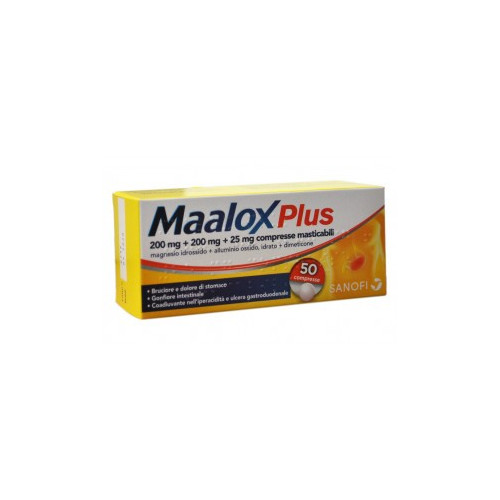
Digestives Maalox reflux 7cpr 20mg Maalox
MAALOX REFLUS 20 MG COMPRESENT
active ingredients
Each gastrorous tablet contains 20 mg of pantoprazole (such as sodium sesquidrate). Excipients with known effects: 38,425 mg of maltitol and 0.345 mg soy lecithin (derived by soy oil) and a maximum of 1,84 mg sodium. For the full list of excipients, see paragraph 6.1.Excellent
Nucleus: maltitol (E965), crospovidone type B, sodium carmellosa, sodium carbonate anidro, calcium stearate. Coating: Poly(vinyl alcohol), talc, titanium dioxide (E 171), macrogol 3350 soybean lecithin, iron yellow oxide (E 172), sodium carbonate anidro copolimer metacrilic acid etil acrilate (1:1) (dispersion containing polysorbate 80 and laurilsulphate sodium), triethylcytrate.Therapeutic indications
Short-term treatment of reflux symptoms (e.g. pyrosis, acid regurgitation) in adults.Contraindications
Hypersensitivity to the active ingredient, substituted benzimidazoles, peanuts, soybeans or any other excipient listed in the paragraph 6.1. The contemporary administration of MAALOX REFLUS with HIV protease inhibitors whose absorption depends on intragastric pH acidity, such as atazanavir and nelfinavir, is contraindicated due to the significant reduction of their bioavailability (see paragraph 4.5). (see paragraph 4.5).Dosage
Population The recommended dose is 20 mg of pantoprazole (one tablet) per day. You may need to take tablets for 2-3 consecutive days to obtain an improvement of symptoms. Once the complete healing of symptoms is achieved, the treatment must be suspended. Treatment should not exceed 4 weeks without consulting a doctor. If no symptoms are improved within 2 weeks of continuous treatment, the patient should contact the doctor.Special populations Dose adjustment is not necessary in elderly patients or patients with kidney or liver impairment. Pediatric population The use of MAALOX REFLUS is not recommended in children and adolescents under 18 years of age due to lack of data on safety and effectiveness. Method of administration Gastro-resistant tablets MAALOX REFLUS 20 mg should not be chewed or crushed, and should be swallowed whole with liquid before meal.Conservation
Do not store at temperature above 25°C.Warnings
Patients should be educated to address their physician if: • have a non-intentional weight loss, anemia, gastrointestinal bleeding, disfagia, recurring vomiting or blood vomiting, since treatment with pantoprazole can relieve symptoms and delay diagnosis of a severe pathology. In these cases a malignant pathology must be excluded. • had previously gastric ulcer or gastrointestinal surgery. • are in continuous symptomatic treatment for indigestion or pyrosis for 4 weeks or more. • have jaundice, liver impairment, or liver disease.• have any other serious pathology that compromises general well-being. • are over 55 years old with new or changed symptoms recently. Patients with recurring symptoms related to indigestion or pyrosis should consult your doctor at regular intervals. In particular, patients with over 55 years of age who daily take any prescription medication for indigestion or pyrosis, must inform the pharmacist or doctor. Patients should not take another H protonic or antagonist pump inhibitor at the same time2. Patients who must be subjected to endoscopy or breathing tests should consult the doctor before taking this medicine. Patients should be informed that tablets are not intended to give immediate relief. Patients may begin to experience an improvement of symptoms after about a day of treatment with pantoprazole, but it may be necessary to take it for 7 days to achieve complete control of pyrosis. Patients should not take pantoprazole as a preventive drug. Gastrointestinal infections caused by bacteria The reduction of gastric acidity, due to any reason, including protonic pump inhibitors, increases the gastric count of bacteria normally present in the gastrointestinal tract. Treatment with drugs that reduce acidity causes a slight increase in the risk of gastrointestinal infections such as Salmonella, , Campylobacter or Clostridium difficult. Subacute cutaneous erythematose lupus (SCLE) Protonic pump inhibitors are associated with very infrequent cases of SCLE. In case of injury, especially in the areas of skin exposed to the sun, and if accompanied by artralgia, the patient must contact a doctor promptly and the doctor must consider the suspension of MAALOX REFLUSSO. The subacute cutaneous lupus erythematose (SCLE) after a previous treatment with a protonic pump inhibitor can increase the risk of SCLE with other protonic pump inhibitors. Soy Lecithin This medicine contains lecithin derived from soy oil. If the patient is allergic to peanuts or soybeans, he should not use this medicine. Maltito This medicine contains maltitol. Patients with rare hereditary problems of fructose intolerance should not take this medicine. Sodium This medicine contains less than 1 mmol of sodium (23 mg) per tablet, i.e. it is essentially “without sodium”. Interference with laboratory exams An increased level of Chromogranin A (CgA) can interfere with diagnostic tests for neuroendocrine tumors. To avoid such interference, treatment with MAALOX REFLUSSO must be suspended for at least 5 days before CgA measurements (see paragraph 5.1). If the levels of CgA and gastrin are not returned within the reference range after initial measurement, it is necessary to repeat the measurements 14 days after the interruption of treatment with protonic pump inhibitor. This medicine is intended exclusively for short-term use (up to 4 weeks) (refer to paragraph 4.2). Patients should be advised of additional risks with the use of the long-term medicinal product and should stress the need for prescription and periodic monitoring. The following additional risks are considered relevant in long-term treatment: Influence on the absorption of vitamin B12 Pantoprazole, like all acid-blockers, can reduce the absorption of vitamin B12 (cyanocobalamin) due to hypo- or achloride. This should be considered in patients with reduced bodily reserves or risk factors for reduced absorption of vitamin B12 in long-term therapy or if the symptoms are observed. Bone fractures Protonic pump inhibitors, especially when used for high doses and extended periods (> 1 year), can slightly increase the risk of hip fractures, pulse and spine, especially in the elderly population or in the presence of other recognised risk factors. Observative studies suggest that protonic pump inhibitors can increase the overall risk of fractures of 10-40%. This increase may be partly due to other risk factors. Patients at risk of osteoporosis must receive treatment based on current clinical guidelines and should take appropriate amounts of vitamin D and calcio.Ipomagnesemia In patients treated with PPI as pantoprazole for at least 3 months and, in many cases for patients treated for a year, the presence of severe hypomagnesemia was reported. Serious manifestations of hypomagnesia such as fatigue, tetania, delirium, convulsions, dizziness and ventricular arrhythmia may occur, which could subduly arise and be underestimated. In most patients, hypomagnesemia improves after the reintegration of magnesium reserves and the suspension of PPI. For patients for whom prolonged treatment with PPI or in association with digoxin or medicines that may cause hypomagnesemia (e.g. diuretics), health professionals should consider measuring magnesium levels before starting treatment with PPI and periodically during treatment.Interactions
Effect of pantoprazole on the absorption of other medicines MAALOX REFLUS can reduce the absorption of active ingredients whose bioavailability depends on gastric pH (e.g. ketoconazole). HIV protease inhibitors The co-administration of pantoprazole with HIV protease inhibitors, such as atazanavir and nelfinavir whose absorption depends on intragastric pH acidity, is contraindicated due to the significant reduction of their bioavailability (see paragraph 4.3). Cucumin antiagulants (fenprocumone or warfarin) Although interactions were not observed in pharmacokinetics clinical trials during the treatment of phenprocumone or warfarin, some isolated cases of variation of the Internationalized Normal Ratio (INR) were reported during the concomitant treatment in the post-marketing period. Therefore, in patients treated with cumarinic anticoagulants (e.g. fenprocumone or warfarin), it is recommended to monitor protrombine/ INR when treatment with pantoprazole begins, when interrupted or when administered in a discontinuous manner. Metotress In some patients, it has been reported that the concomitant use of high-dose metotressate (e.g. 300 mg) and protonic pump inhibitors increases metotressate levels. Therefore, in cases where metotressate is used at high dosage, for example in the treatment of tumors and psoriasis, a temporary suspension of pantoprazole therapy should be assessed. Other interaction studies Pantoprazol is metabolized in the liver by the enzyme system of the P450 cytochrome. Interaction studies with carbamazepine, caffeine, diazepam, diclofenac, digoxin, ethanol, glybenclamide, metoprolol, naprossene, nifedipine, phenytoin, pyroxicam, theophylline and an oral contraceptive containing levonorgestrel and etylestradiol have not evidenced clinically significant interactions. In any case, a pantoprazole interaction with other substances that are metabolized by the same enzymatic system cannot be excluded. There were no interactions with antacids administered simultaneously.Effects
Summary of security profile One can expect about 5% of patients manifest adverse reactions. The most commonly reported adverse reactions are diarrhea and headaches, both occurring in about 1% of patients. Table of adverse reactions The following adverse reactions were observed with pantoprazole. Within the table below, adverse reactions are classified according to MedRA frequency rating: very common (≥1/10); common (≥1/100, Table 1. Adverse reactions with pantoprazole in clinical studies and post-marketing experience| Frequency Classification for systems and organs | Town | Not common | Rare | Very rare | Notable |
| Emolinfopoietic system pathologies | Agranulocytes | Trombocytopenia; Leucopenia, Pancitopenia | |||
| Immune system disorders | Hypersensitivity (including anaphylactic reactions and anaphylactic shock) | ||||
| Disorders of metabolism and nutrition | Hyperlipidemias and increased lipids (triglycerides, cholesterol); weight variations | Hyponatriemia, hypomagnesiemia Ipocalcemia in association with hypomagnesemia | |||
| Psychiatric disorders | Sleep disturbances | Depression (and all aggravated forms) | Disorientation (and all aggravated forms) | Hallucinations; Confusion (especially in pre-existence patients, as well as aggravation of these events) | |
| Diseases of the nervous system | Headache; headmen | Disorders of taste | Opinion | ||
| Pathologies of the eye | Disorders of vision / blurred vision | ||||
| Gastrointestinal diseases | Fungus gland polyps (drinks) | Diarrhea; Nausea / vomiting; Abdominal distension and swelling; Stitching; Dry mouth; Pain and abdominal disorders | Microscopy Colite | ||
| Hepatobiliary diseases | Increased liver enzyme levels (transaminasis, γ-GT) | Increase in bilirubin | Hepatocellular lesion; Ittero; Hepatocellular insufficiency | ||
| Pathologies of skin and subcutaneous tissue | Skin rash / exantema / eruption; Prudence | Orticaria; Angioedema | Steven-Johnson syndrome; Lyell syndrome; Multiform erythema; Photosensitivity lupus erythematose subacute skin (see paragraph 4.4) | ||
| Diseases of musculoskeletal system and connective tissue | Pulse fractures, hip and spine fractures | Artralgia; Mialgia | |||
| Kidney and urinary pathologies | Interstitial nephritis | ||||
| Pathologies of the reproductive apparatus and of the breast | Gynecomastia | ||||
| Systemic pathologies and conditions for administration | Astenia, fatigue and malaise | Increased body temperature; Peripheral edema |
Overdosing
Doses up to 240 mg administered intravenously in 2 minutes were well tolerated. Since pantoprazole is widely linked to proteins, it is not readily dialysis. In case of overdose with clinical signs of intoxication, other than symptomatic and support treatment, specific therapeutic recommendations cannot be made.Pregnancy
There is no adequate data regarding the use of pantoprazole in pregnant women. Animal studies have shown reproductive toxicity. Preclinical studies have not shown any impairment of fertility or teratogenic effects (see paragraph 5.3). The potential risk for human beings is not known. MAALOX REFLUS should not be used during pregnancy.Food
The presence of pantoprazole/metabolites has been identified in breast milk. The effect of pantoprazole on infants/ infants is not known. MAALOX REFLUS should not be used during breastfeeding.Fertility
There was no evidence of reduced fertility following the administration of pantoprazole in animal studies (see paragraph 5.3).Source: Farmadati