Descrizione Clinica
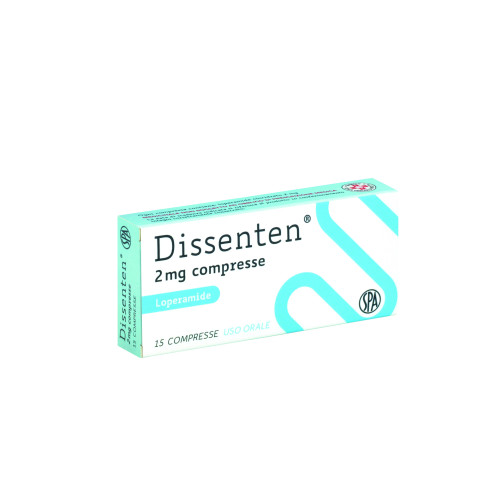
Diarrea Loperamide my 12dosi liof 2mg Mylan
LOPERAMI MYLAN 2 MG
active ingredients
Loperamide Hydrochloride 2 mg equivalent to 1,85 mg of loperamide per dose of oral lyophilate Eccipients with known effects: 1.0 mg of aspartame (E951) For the full list of excipients, see paragraph 6.1.Excellent
Pullulan (E1204), Mannitol (E421), Sodium Hydrogenocarbonate (E500), Aspartame (E951), Polysorbate 80 (E433), Peppermint Aroma (Maize Geltodextrins, Flavoury Ingredients and Modified Corn Starch, 1450).Therapeutic indications
Symptomatic treatment of acute diarrhea in adults and adolescents from 12 years of age.Contraindications
Loperamide Hydrochloride is contraindicated in: • patients with known hypersensitivity to loperamide hydrochloride or any of the excipients listed in paragraph 6.1 • children under 2 years of age • patients with acute dysentery, characterized by blood in the feces and high body temperature. • patients with acute ulcerative colitis • patients with bacterial enterocolitis caused by invasive organisms including Salmonella, Shigella and Campylobacter • patients with pseudomembranous colitis associated with the use of broad spectrum antibiotics Loperamide Hydrochloride should not be used when the inhibition of peristalsis should be avoided due to the possible risk of significant sequel, including megancle. Loperamide hydrochloride should be interrupted immediately if stipsis, abdominal distension or ileum develop.Population
Population Adults Two doses of oral lyophilate (4 mg) initially followed by 1 dose of oral lyophilate (2 mg) after each subsequent evacuation of unformed feces (molli), not before 1 hour after taking the initial dose. The usual dose is 3-4 doses of oral lyophilate (6 mg-8 mg) per day; the maximum daily dose should not exceed 6 doses of oral lyophilate (12 mg). Adolescents from 12 years of age An oral lyophilized dose (2 mg) initially followed by 1 dose of oral lyophilized (2 mg) after each subsequent evacuation of soft feces, not before 1 hour after taking the initial dose. The maximum daily dose should not exceed 4 doses of oral lyophilate (8 mg). The maximum duration of treatment without consulting a doctor is 2 days. Children This medicine is not intended for children between 2 and 12 years of age. Seniors: Dose adjustment is not necessary in the elderly Compromise of kidney function In patients with renal impairment, dose adjustment is not necessary. Compromise of liver function: Although no pharmacokinetic data is available in patients with liver impairment, this medicine must be used with caution in these patients due to a reduced first-pass metabolism (see paragraph 4.4). Method of administration: The oral lyophilized dose must be placed on the tongue, where it dissolves and can be ingested with saliva. Intake of fluids for oral lyophilisation is not necessary.Conservation
This medicine does not require any special condition of conservation.Warnings
The treatment of diarrhea with loperamide hydrochloride is only symptomatic. Whenever a basic etiology can be determined, specific treatment should be given when appropriate. In acute diarrhea the priority is the prevention or reversal of hydroelectrolysis. This is particularly important in small children and in fragile and elderly patients with acute diarrhea. The use of loperamide hydrochloride does not preclude the administration of an electrolyte replacement therapy. Since persistent diarrhea can be a potentially more severe condition indicator, loperamide hydrochloride should not be used for prolonged periods until the basic cause of diarrhea was sought. When clinical changes are not observed in acute diarrhea within 48 hours, the administration of loperamide hydrochloride should be interrupted and patients should be advised to consult the doctor. Loperamide Hydrochloride should be interrupted as soon as bowel movements solidify or as soon as further bowel movements occur for more than 12 hours. Patients with AIDS treated with loperamide hydrochloride for diarrhea must stop therapy at the first signs of abdominal distension. In patients with AIDS with infectious colitis caused by viral and bacterial pathogens treated with loperamide hydrochloride, isolated cases of stipsis were reported with an increase in the risk of toxic megacolons. Although no pharmacokinetic data is available in patients with impairment of liver function, in such patients loperamide hydrochloride should be used with caution, due to reduction of first-pass metabolism, since this could cause a relative overdose leading to a central nervous system toxicity (SNC). Heart events were reported including the extension of QT and QRS complex, point twists in association with overdose. Some cases were fatal (see paragraph 4.9). Overdose can make the presence of Brugada syndrome manifest. Patients should not exceed the recommended dose and/or do not protract the duration of therapy. This medicine contains less than 1 mmol (23 mg) of oral sodium, i.e. it is essentially “sodium-free”. This medicine contains 1.0 mg of aspartame in each dose of oral lyophilisate. Aspartame is a source of phenylalanine. It can be harmful if the patient is suffering from phenylchetonuria (PKU), a rare genetic disease that causes the accumulation of phenylalanine because the body fails to dispose of it properly.Interactions
Non-clinical data have shown that loperamide hydrochloride is a substrate of P-glycoprotein. Concurrent administration of loperamide hydrochloride (in a single dose of 16 mg) with chinidine or ritonavir, both P-glycoprotein inhibitors, showed an increase of 2 to 3 times of plasma levels of loperamide hydrochloride. The clinical relevance of this pharmacokinetic interaction with P-glycoprotein inhibitors, when loperamide hydrochloride is administered to recommended dosages, is not known. Concurrent administration of loperamide hydrochloride (in a single dose of 4 mg) and itraconazole, an inhibitor of CYP3A4 and P-glycoprotein, showed an increase of 3 to 4 times of plasma concentrations of loperamide hydrochloride. In the same study the gemfibrozil, a CYP2C8 inhibitor, increased the plasma concentrations of loperamide hydrochloride by about 2 times. The combination of itraconazole and gemfibrozil showed a 4-time increase in plasma levels of loperamide hydrochloride peak and a 13-fold increase in total plasma exposure. These increases were not associated with effects on the central nervous system (SNC), as detected by psychomotor tests (e.g. subjective drowsiness and the test of substitution of symbols and digits - Digit Symbol Substitution Test). Concurrent administration of loperamide hydrochloride (in a single dose of 16 mg) and ketoconazole, an inhibitor of CYP3A4 and P-glycoprotein, has resulted in a 5-fold increase in plasma concentrations of loperamide hydrochloride. This increase was not associated with an increase in pharmacodynamic effects, as detected by the pupillometry. Concurrent treatment with oral desmopressin resulted in an increase of 3 times of plasma concentrations of desmopressin, presumably due to a slowdown in gastrointestinal motility. Treatment with substances with similar pharmaceutical properties can enhance the effect of hydrochloride loperamide and drugs that accelerate intestinal transit can decrease its effect.Effects
Pediatric population The safety of loperamide hydrochloride was assessed in 607 patients aged 10 days and 13 years who participated in 13 controlled or uncontrolled clinical trials using loperamide hydrochloride in the treatment of acute diarrhea. Overall, the profile of adverse reactions in this patient population was similar to that observed in clinical studies with loperamide hydrochloride in adults and adolescents over 12 years of age. Adults and children aged 12 or overThe safety of loperamide hydrochloride was assessed in 2755 adults and children aged ≥ 12 years who participated in 26 controlled and uncontrolled clinical trials of loperamide hydrochloride used for treating acute diarrhea. The most commonly reported adverse reactions to the drug (ADR) (impact ≥ 1%) in clinical studies with loperamide hydrochloride for the treatment of acute diarrhea were: constipation (2.7%), flatulence (1.7%), headache (1.2%) and nausea (1.1%). Table 1 shows ADRs that have been reported using hydrochloride loperamide from clinical trials (acute diarrhea) or post-marketing experience. Frequency categories are defined in accordance with the following convention: very common (≥1/10); common (from ≥1/100 to Table 1 adverse reactions to the drug| Classification for systems and organs | Municipalities | Not common | Rare | Not known |
| Immune system disorders | Hypersensitivity reactiona Anaphylactic reaction (including anaphylactic shock)a Anaphylactic reactiona | |||
| Diseases of the nervous system | Cefa | Managers Sonnolenzaa | Loss of knowledgea Stuporea Level of altered consciousnessa Muscle hypertoniaa Coordination disordersa | |
| Pathologies of the eye | Othera | |||
| Gastrointestinal diseases | Constipation Nausea Flatulenza | Abdominal pain Abdominal discomfort Dry mouth Upper abdominal pain Vomiting Dyspepsiaa | Ileuma (including paralytical ileo) Megacolon a (including toxic megacolonb) Abdominal distension Glossodiniac | |
| Pathologies of skin and subcutaneous tissue | Skin rash | Bold eruptiona (including Stevens-Johnson syndrome, toxic epidermal necrolysis and multiform erythema) Angioedemaa Urticariaa Prudencea | ||
| Kidney and urinary pathologies | Urinary retention a | |||
| Systemic pathologies and conditions for administration | Fatiguea | |||
| Gastrointestinal diseases | Acute pancreatis | |||
| a: The inclusion of this term is based on post-marketing reports for loperamide hydrochloride. Since the process of determining post-marketing ADRs did not differentiate between indications of chronic and acute diarrhea or between adults and children, the frequency is estimated on the basis of all clinical studies with hydrochloride loperamide (acute and chronic), including those conducted on children aged ≤12 years (N=3683). | ||||
| b: See paragraph 4.4 Special warnings and precautions for use. | ||||
| c: Report only with orodispersible tablets. | ||||
Overdose
Symptoms: In case of overdose (including relative overdose, due to hepatic dysfunction) depression of the SNC may occur (strength, coordination abnormalities, drowsiness, myosis, muscle hypertonia and respiratory depression), stipsis, urinary retention and ileum. Children and patients with liver dysfunction can be more sensitive to the effects of the central nervous system. In patients who ingested excessive doses of loperamide hydrochloride heart events were observed such as extension of the QT range and QRS complex, point torsions, other severe ventricular arrhythmias, cardiac arrest and syncope (see paragraph 4.4). Fatal cases have also been reported. Overdose can make the presence of Brugada syndrome manifest. Treatment: In case of overdose, ECG monitoring must be initiated for extension of the QT range. If symptoms arise at the expense of the SNC, you can administer naloxone as an antidote. Since the duration of action of loperamide hydrochloride is more extensive than that of naloxone (from 1 to 3 hours), repeated treatment with naloxone can be indicated. Therefore, the patient must be carefully monitored for at least 48 hours in order to detect a possible depression of the central nervous system.Pregnancy
There are limited data from the use of loperamide hydrochloride in pregnant women.Animal studies do not indicate direct or indirect harmful effects with respect to reproductive toxicity (see section 5.3).As a precautionary measure, it is preferable to avoid the use of loperamide hydrochloride during pregnancy.Food
It is not believed that loperamide can cause effects on infants/ infants, since systemic exposure to loperamide of nursing women is negligible. Loperamide can be prescribed temporarily during breastfeeding if dietary measures are insufficientFertility
Data on the effects of loperamide hydrochloride on fertility in humans are not available. The results of animal studies indicate no effect of hydrochloride loperamide on fertility at therapeutic doses.Source: Farmadati