Descrizione Clinica
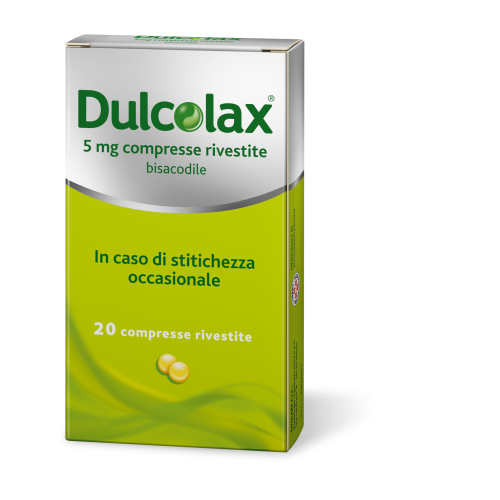
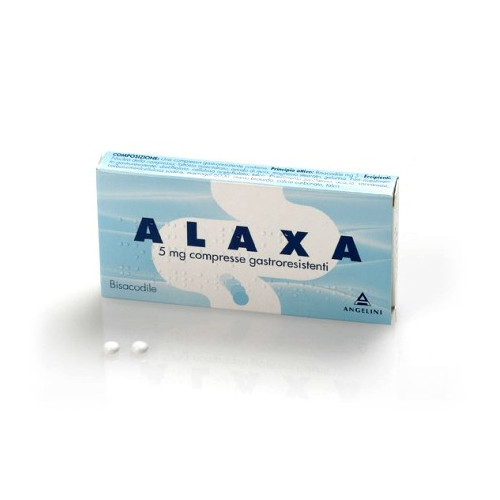
Laxenil 20cpr riv 5mg Alter Laboratories
STIXENIL 5 MG COMPRESENT RIVES
active ingredients
A coated tablet contains: Active ingredient: bisacodile mg 5. Excipients with known effects: lactose, sucrose For the full list of excipients, see paragraph 6.1.Excellent
Lactose monohydrate, corn starch, sucrose, talc, glyceryl beenato, magnesium carbonate, methacrylic copolymers, PEG 4000, titanium dioxide.Therapeutic indications
Short-term treatment of occasional constipation.Contraindications
Hypersensitivity to the active ingredient or any of the excipients listed in paragraph 6.1. Laxatives are contraindicated in subjects with acute or unknown abdominal pain, nausea or vomiting, obstruction or intestinal stenosis, rectal bleeding of unknown origin, severe state of dehydration. Generally contraindicated during pregnancy and nursing (see p. 4.6). Generally contraindicated in pediatric age (see p. 4.4). The drug contains sucrose: therefore patients suffering from rare hereditary problems of fructose intolerance, glucose-galactose mal absorption, or from insufficiency of isomaltase sucrasis, should not take this medicine. The medicine contains lactose, therefore, patients suffering from rare hereditary problems of galactose intolerance, lactase deficiency, or glucose-galactose mal absorption, should not take this medicine.Population
Children aged 10 or under chronic constipation must be treated under strict medical control. The bisacodile should not be used in children aged 2 or older. Population. Short-term treatment of constipation. Adults and children over 10 years old: 1-2 coated tablets (5-10 mg) per day before bedtime. Pediatric population. Children from 2 to 10 years of age: 1 tablet (5 mg) coated daily before bedtime. Method of administration: Do not take with milk or antacids; to allocate the medicinal product at least one hour. Do not take with other oral medicines: to allocate at least two hours the intake of laxative. The correct dose is sufficient to produce an easy evacuation of soft feces. It is advisable to initially use the minimum doses provided. When necessary, the dose may be increased, but never exceed the maximum indicated. Preferably in the evening. Laxatives must be used as frequently as possible and for no more than seven days. Use for longer periods of time requires the doctor's prescription after adequate evaluation of the individual case. The tablets should be swallowed whole. Eating together with an adequate amount of water (a plentiful glass). A fluid-rich diet promotes the effect of the medicine.Conservation
Do not store at temperature above 25 °C.Warnings
Laxative abuse (frequent or prolonged use or excessive doses) can cause persistent diarrhea resulting in water loss, mineral salts (especially potassium) and other essential nutrients. In the most serious cases, dehydration or hypopotassiemia may occur, which may lead to cardiac or neuromuscular dysfunctions, especially in the case of contemporary treatment with cardiac glycosides, diuretics or corticosteroids. The abuse of laxatives, especially those of contact (stimulating laxatives), can cause dependence (and, therefore, possible need to progressively increase the dosage), chronic constipation and loss of normal intestinal functions (intestinal atonia). Treatment of chronic or recurring constipation always requires medical intervention for diagnosis, prescription of drugs and surveillance during therapy. Consult your doctor when the need for laxative comes from a sudden change of previous intestinal habits (frequency and evacuation characteristics) that lasts for more than two weeks or when the use of laxative fails to produce effects or when the patient is suffering from diabetes mellitus, hypertension or cardiopathy. You should also consult your doctor before using the medicine. In children under 12 years, the medicine can only be used after consulting the doctor. The use of laxatives in patients with inflammatory bowel diseases or in the presence of abdominal pain, nausea or vomiting, can be dangerous and therefore requires careful assessment by the doctor. With the use of bisacodile, cases of dizziness or syncopathetics were reported during defecation, compatible with the defecation syncope (attributable to the effort of the defecation itself) or with a vasovagal response to abdominal pains that may associate with the stipsi. Important information about some excipients: STIXENIL contains 20 mg for each sucrose tablet, which is taken into account when the product should be taken by diabetic subjects or that follow hypocaloric diets. Patients with rare hereditary problems of fructose intolerance, glucose-galactosis mal absorption, or isomaltase sucrasis failure, should not take this medicine. STIXENIL contains 60 mg per lactose tablet. Patients with rare hereditary problems of galactose intolerance, total lactase deficiency, or glucose-galactose mal absorption, should not take this medicine.Interactions
Laxatives can reduce the time of stay in the intestine, and therefore the absorption, of other drugs administered simultaneously orally. Avoid ingesting laxatives and other drugs at the same time: after taking a medicine let spend a range of at least 2 hours before taking laxative. Concurrent use of diuretics or corticosteroids can increase the risk of electrolytic imbalance if you take bisacodyle in excessive quantities. Electrolytic imbalance can result in increased sensitivity to glycosides. Milk and antacids may change the effect of the medicinal product; let you spend at least an hour before taking the laxative.Effects
The frequency of adverse events is ordered according to the following criterion: very common (> 1/10), common (≥ 1/100, Municipality: The most commonly reported side effects during treatment with STIXENIL are abdominal pain and diarrhea. Immune system disorders: anaphylactic reactions, angioedema and other hypersensitivity reactions. Disorders of the nervous system: dizziness, syncopathetics (the phenomena of dizziness and syncopathetics that occur after taking bisacodyle seem to be ascribable to a vasovagal response, for example, to abdominal pain, or to evacuation of feces). Disorders of metabolism and nutrition: dehydration. Gastrointestinal diseases: colitis, abdominal cramps, abdominal pain, diarrhea, vomiting, nausea, hematochetia (blood in the feces), abdominal malaise, anorenal discomfort. Reporting of suspicious adverse reactions. The reporting of suspicious adverse reactions that occur after the authorization of the medicinal product is important, as it allows continuous monitoring of the benefit/risk ratio of the medicinal product. Healthcare workers are required to report any suspected adverse reaction via the national reporting system at the address https://www.aifa.gov.it/content/segnalazioni-reazioni-avverse.Overdosing
Excessive doses can cause abdominal pain and diarrhea; the consequent losses of liquids and electrolytes must be replaced. See also the paragraph “Special Warnings and Precautions of Use” about the abuse of laxatives.There are no adequate and well-controlled studies on the use of STIXENIL during pregnancy or nursing. Therefore, the medicinal product must be used only if necessary, under the direct control of the doctor, after evaluating the expected benefit for the mother in relation to the possible risk for the fetus or the infant.
Source: Farmadati