Descrizione Clinica
NICORETTE MEDICAL MASTICAL GOMME
active ingredients
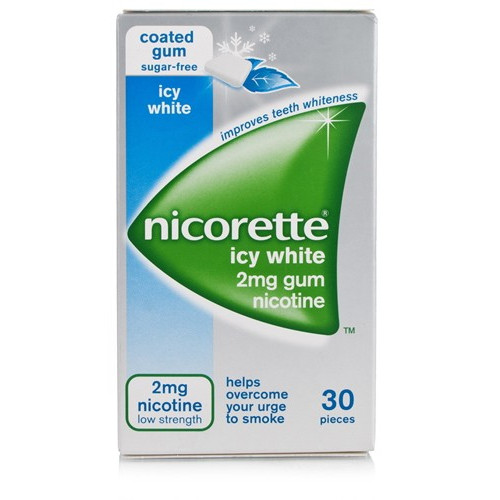
NICORETTE 2 mg chewing gums medicated A rubber contains: • active ingredient: 10 mg of nicotinic resin complex containing 20% nicotine, corresponding to 2 mg of nicotine; • excipients with known effects: sorbitol, sodium, ethanol. Peppermint and fruit (contain cynnamal, cynnamic alcohol, cytronellol, eugenol, geraaniol, isoeugenol, lemon, linalol) 11 mg/ chewing gum. NICORETTE 4 mg medicated chewing gum One gum contains: • active ingredient: 20 mg of nicotine resin complex containing 20% nicotine, corresponding to 4 mg of nicotine;• excipients with known effects: sorbitol, sodium, ethanol.Mint and fruit flavours (contain cinnamal, cinnamic alcohol, citral, citronellol, eugenol, geraniol, isoeugenol, limonene, linalool) 11 mg/chewing gum. NICORETTE 2mg medicated chewing gum strong mint flavor One gum contains: active ingredient: 10 mg of nicotine resin complex containing 20% nicotine, corresponding to 2 mg of nicotine. NICORETTE 4mg medicated chewing gum strong mint flavor One gum contains: • active ingredient: 20 mg of nicotine resin complex containing 20% nicotine, corresponding to 4 mg of nicotine.For the complete list of excipients, see paragraph 6.1.Excellent
NICORETTE 2 mg chewing gums medicated: One gum contains: anhydrous sodium carbonate, sodium bicarbonate, chewing gum base, sorbitol powder, sorbitol 70% solution, mint and fruit flavors (contain traces of ethanol, cinnamal, cinnamic alcohol, citral, citronellol, eugenol, geraniol, isoeugenol, limonene, linalool), glycerin 85% solution. NICORETTE 4 mg medicated chewing gum: One gum contains: sodium carbonate anhydrous, chewing gum base, sorbitol powder, sorbitol solution 70%, mint and fruit flavours (contain traces of ethanol, cinnamal, cinnamic alcohol, citral, citronellol, eugenol, geraniol, isoeugenol, limonene, linalool), glycerine solution 85%, quinoline yellow (E 104). NICORETTE 2mg medicated chewing gum strong mint flavor: One gum contains: chewing gum base, xylitol, peppermint oil, acesulfame potassium, sodium carbonate, sodium bicarbonate, levomenthol, magnesium oxide, pregelatinized starch, titanium dioxide, carnauba wax, hypromellose, sucralose, polysorbate 80, ice mint. NICORETTE 4mg medicated chewing gum strong mint flavor: One gum contains: chewing gum base, xylitol, peppermint oil, acesulfame potassium, sodium carbonate, levomenthol, magnesium oxide, pregelatinized starch, titanium dioxide, carnauba wax, quinoline yellow (E 104), hypromellose, sucralose, polysorbate 80, ice mint.Therapeutic indications
Treatment for smoking cessation.Contraindications
Hypersensitivity to nicotine or to any of the excipients listed in section 6.1 NICORETTE it should not be administered in the following cases: • non-smokers;• recent myocardial infarction;• unstable or aggravated angina pectoris;• Prinzmetal's angina;• severe cardiac arrhythmia;• acute stroke;• pregnancy and breastfeeding (see section 4.6);• children and adolescents under 18 years of age.Population
Population The dosage of NICORETTE it depends on the amount of cigarettes normally consumed by the individual smoker. Adults and seniors It is advisable to start with the 2 mg preparation, identifying, as needed, the optimal dosage, i.e. the number of gums to chew during the day.The number of gums used must be sufficient to cover the nicotine requirement.Chew one gum every time you feel the need to smoke.In most smokers, 10 gums of 2 mg per day are usually sufficient.If 15 gums of 2 mg per day are not sufficient, such as in heavy smokers (more than 20 cigarettes per day), it is preferable to use NICORETTE 4 mg gummies, or two 2 mg gummies at a time.Do not use more than 15 4 mg gummies per day. The recommended duration of treatment is 3 months. After this period, the daily dose should be gradually reduced.When this has dropped to 1-2 gums, it is advisable to try to completely stop using NICORETTE. However, it is advisable to keep some spare chewing gum on hand in case of a sudden return of the desire to smoke.For the use of NICORETTE gums in diabetic subjects see paragraph 4.4. It is not advisable to continue the treatment beyond 12 months. Pediatric population Safety and efficacy in children and adolescents under 18 years of age have not yet been established. Method of administration It's important CHEW VERY SLOWLY FOR AT LEAST 30 MINUTES to obtain the release of nicotine.Chewing too quickly determines the absorption of nicotine in too short a time: to avoid this inconvenience it is advisable to stop chewing from time to time.Conservation
Store below 25°C.Warnings
Nicotine administration should be temporarily discontinued if any symptoms of overdose occur (see section 4.9).If symptoms of nicotine overdose persist, nicotine intake should be decreased either by frequency of administration or by lowering the dosage.It is important that therapy is supported by other activities to facilitate smoking cessation.A risk-benefit assessment by a competent physician is necessary for patients with the following conditions: • severe cardiovascular disease (e.g. peripheral occlusive arterial disease, cerebrovascular disease, cardiac failure), vasospasm and uncontrolled hypertension, as the cardiovascular effects of nicotine may be hazardous.Such patients should be encouraged to stop smoking by non-pharmacological interventions (such as counselling);if this is not sufficient, therapy with medicated chewing gum may be considered.As safety data in this patient group are limited, treatment should only be initiated with caution;• moderate and severe hepatic impairment and/or severe renal impairment.Use with caution in such patients as the clearance of nicotine or its metabolites may be reduced with a potential increase in adverse effects;• oesophagitis and/or gastric or peptic ulcers.Use with caution in such patients as nicotine may worsen the symptoms of these conditions;• diabetes mellitus.Such patients should be advised to monitor their blood sugar levels more frequently than usual since, when smoking is stopped and nicotine replacement therapy (NRT) is started, the nicotine-induced release of catecholamines is reduced and this may affect carbohydrate metabolism;• uncontrolled hyperthyroidism or pheochromocytoma, as nicotine causes the release of catecholamines from the adrenal glands.The use of NICORETTE is less risky than smoking.Smokers who wear dentures may have difficulty chewing NICORETTE gum, chewing gum may stick to dentures and in rare cases damage them. Smoking cessation, with or without nicotine replacement, may alter the pharmacokinetics of some concomitantly administered drugs (see section 4.5).Persistent nicotine dependence may occur. Smoking and concomitant use of nicotine replacement therapy (NRT) When using nicotine replacement products to reduce smoking, the nicotine from cigarettes is also present in the body.It is unclear whether the nicotine from cigarettes affects the elimination of nicotine from nicotine replacement products or vice versa.Although it has been reported that nicotine is eliminated more rapidly in smokers than in nonsmokers, suggesting that nicotine promotes its own elimination, a more detailed study showed that the opposite is also true.Another study found that cotinine, the major metabolite of nicotine produced by smoking, did not increase or decrease nicotine elimination.In a more direct test in the same subjects, elimination of intravenously administered nicotine was 36% slower during a short period of smoking compared to a short period of abstinence. Important information about some excipients NICORETTE 2 mg chewing gums medicated contains 202.4 mg of sorbitol. NICORETTE 4 mg medicated chewing gum contains 197 mg sorbitol.Patients with hereditary fructose intolerance should not take this medicine.The additive effect of co-administration of medicinal products containing sorbitol (or fructose) and the daily intake of sorbitol (or fructose) with the diet should be taken into account.The sorbitol content of oral medicinal products may alter the bioavailability of other concomitantly administered oral medicinal products. NICORETTE medicated chewing gum contains flavorings with cinnamal, cinnamic alcohol, citral, citronellol, eugenol, geraniol, isoeugenol, limonene, linalool in each gum.These substances may cause allergic reactions. NICORETTE medicated chewing gum contains 0.616 mg of ethanol in each gum, equivalent to less than 0.0154 ml of beer or 0.00616 ml of wine.The amount of ethanol contained in this medicine comes from the flavourings it contains.This ethanol content is such that it does not produce any relevant effects. NICORETTE 2mg medicated chewing gum strong mint flavor contains 171 mg sodium (main component of table salt) per maximum daily dose.This is equivalent to 8.55% of the maximum recommended daily dietary intake for an adult. NICORETTE 4mg medicated chewing gum strong mint flavor contains 195.2 mg sodium (main component of table salt) per maximum daily dose.This is equivalent to 9.76% of the maximum recommended daily dietary intake for an adult.Interactions
Clinically relevant interactions between nicotine replacement therapy and other medicinal products have not been definitively established.However, nicotine may potentially increase the haemodynamic effects of adenosine, such as increased blood pressure, heart rate and also increased pain response (such as chest pain, angina pectoris) caused by adenosine administration.Smoking is associated with increased CYP1A2 enzyme activity.After smoking cessation, a reduction in the clearance of substrates of this enzyme may occur.This may lead to increased plasma levels of some potentially clinically important medicinal products for those drugs with a narrow therapeutic index such as phenacetin, caffeine, theophylline, tacrine, clozapine and ropinirole.Smoking cessation may increase plasma levels of: • acetaminophen, caffeine, imipramine, oxazepam, pentazocine, propranolol, theophylline, due to inhibition of hepatic enzymes;• insulin, due to increased subcutaneous insulin absorption;• adrenergic antagonists (prazosin, labetalol) and adrenergic agonists (isoprenaline, phenylephrine), due to the decrease in catecholamine circulation caused by smoking cessation.• olanzapine, clomipramine and fluvoxamine as they are partially metabolised by the CYP1A2 enzyme, although data are scarce and the possible clinical significance is unknown.In such cases, a dose reduction may be necessary when smoking is stopped.Smoking cessation may also decrease: • the absorption of glutethimide • phase I metabolism of propoxyphene Both smoking and nicotine can increase circulating levels of cortisol and catecholamines.It may be necessary to adjust therapies with adrenergic agonists or blockers in relation to the phases of nicotine therapy or the quantity of cigarettes smoked.Therefore, in case of concomitant therapies, it is necessary to consult your doctor.Limited data also indicate that smoking may induce the metabolism of flecainide and pentazocine.Effects
Nicotine withdrawal Abrupt cessation of tobacco products after prolonged daily use causes a characteristic withdrawal syndrome characterized by the following symptoms: dysphoria or depressed mood;insomnia;irritability, frustration, anger;anxiety;difficulty concentrating, restlessness or impatience;bradycardia;increased appetite or weight gain, dizziness and headache.Intense nicotine craving, which is recognized as a relevant clinical symptom, is also an important element in nicotine withdrawal.Most of the adverse effects experienced by subjects occur during the first phase of treatment and are mostly dose-dependent.Irritation of the mouth and throat may occur, however most subjects adapt with continued use. Adverse reactions reported in clinical studies Nicotine safety from clinical studies is based on data from a meta-analysis of randomized clinical trials for smoking cessation treatment.Table 1 lists adverse reactions reported with a frequency ≥1%, identified from a meta-analysis of data from clinical trials with oral nicotine formulations.| Gastrointestinal diseases | Abdominal pain, dry mouth, dyspepsia, flatulence, nauseaa, salivary hypersecretion, stomatitis, vomitinga. |
| Systemic pathologies and conditions for administration | Burning at application site, fatiguea. |
| Immune system disorders | Hypersensitivitya |
| Diseases of the nervous system | Cefaa, dysgeusia, paresthesiaa. |
| Respiratory, chest and mediastinic pathologies | Cough, hiccups, throat irritation. |
Overdosing
If the patient is an occasional smoker or smokes a few cigarettes a day, or chews gum NICORETTE overdose may occur when other forms of nicotine (inhalers, patches) are taken at the same time.Symptoms of overdose are nicotine poisoning and include nausea, vomiting, excessive salivation, abdominal pain, diarrhea, sweating, headache, dizziness, hearing problems, and obvious weakness.At high doses, these symptoms may be followed by hypotension, weak and irregular pulse, difficulty breathing, prostration, circulatory collapse, and generalized convulsions.Doses of nicotine tolerated by adult smokers during treatment may cause severe poisoning symptoms in children and may be fatal.Suspected nicotine poisoning in a child should be considered a medical emergency and treated immediately.The minimum acute lethal oral dose of nicotine in humans is thought to be 40 to 60 mg. Treatment of overdose: nicotine intake should be stopped immediately and the patient should be treated symptomatically.If necessary, artificial respiration with oxygen should be used.If excessive nicotine is taken, activated charcoal reduces the gastrointestinal absorption of nicotine.Smoking during pregnancy is associated with serious health risks for the woman, the fetus and the child.Smoking can cause damage to the fetus such as intrauterine growth retardation, premature birth or neonatal death.It is therefore advisable to stop as soon as possible. Pregnancy
Pregnant women should use NICORETTE only under medical control. Only in case the pregnant woman continues to smoke, can the use of NICORETTE, the use of which may involve potential risks.The harmful effects of cigarette smoking during pregnancy and on the health of the fetus have been clearly identified and include low birth weight, increased risk of spontaneous abortion, increased neonatal mortality.Specific effects of NICORETTE on fetal development are unknown.Nicotine reaches the fetus and affects its cardiorespiratory system.The effect on circulation is dose-dependent.Therefore, smokers are advised to try to quit smoking without the use of drugs.Cases of spontaneous abortion have been reported during therapy;as with smoking, it cannot be excluded that nicotine may contribute to this occurrence.Nicorette is not recommended during labor and delivery.The effects of nicotine on the mother or fetus during labor are unknown.The risk of continuing to smoke may cause greater harm to the fetus than that caused by the use of nicotine replacement therapy, according to a controlled smoking cessation program. Food
The effect of the drug in breast-fed infants has not been studied.Nicotine passes freely into breast milk;the milk-plasma ratio is in the order of 2.9. This also occurs with the use of drugs containing nicotine, at the recommended therapeutic doses.A newborn eliminates nicotine by means of the first liver passage, however the efficiency of removal is lower at birth.It is assumed that with the correct use of NICORETTE nicotine concentrations in breast milk are lower than those obtained with cigarette smoking, since with replacement therapy nicotine concentrations in maternal plasma are generally reduced.Medicated chewing gum should therefore be avoided during breastfeeding.In case you are unable to stop smoking, the use of NICORETTE in women who are breastfeeding it should be started only after consulting the doctor.
Source: Farmadati