Descrizione Clinica
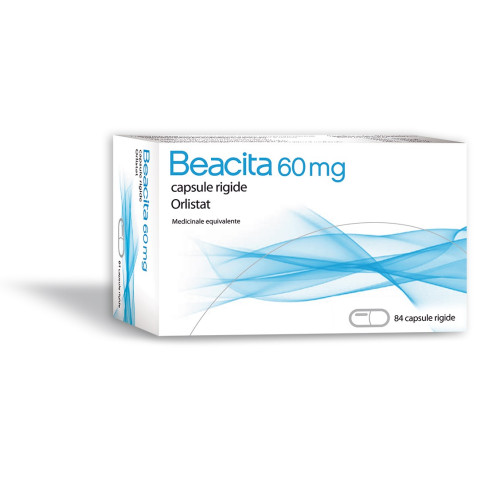
Weight loss Alli 84cps 60mg fl
ALLI 60 MG CAPSUDE
active ingredients
Each rigid capsule contains 60 mg of orlistat. For the full list of excipients, see paragraph 6.1.Excellent
Content of the capsule Microcrystalline cellulose (E460) Sodium glycolate Povidone (E1201) Sodium laurilsulfate Talco Oper Gelatin Indigotin (E132) Titanium Dioxide (E171) Sodium laurilsulphate Sorbitan monolaurate Capsule Printing Ink Rubber Black Iron oxide (E172) propylene glycol Band Gelatina Polisorbato 80 Indigotin (E132).Therapeutic indications
alli is indicated for weight loss in overweight adults (body mass index, BMI, ≥ 28 kg/m2) and must be taken in association with a moderately hypocaloric diet and reduced fat content.Contraindications
• Hypersensitivity to the active ingredient or any of the excipients listed in paragraph 6.1 • Concurrent treatment with cyclosporin (see paragraph 4.5) • Chronic mal absorption syndrome • Colestasis • Pregnancy (see paragraph 4.6) • Nursing (see paragraph 4.6) • Concurrent treatment with warfarin or other oral anticoagulants (see paragraphs 4.5 and 4.8)Population
Population Adults The recommended dose of alli is a 60 mg capsule to be taken three times a day. You should not take more than three 60 mg capsules in 24 hours. Diet and exercise are important components of a weight loss program. It is recommended to start a diet and exercise program before starting treatment with alli. During treatment with orlistat, the patient must follow a diet balanced from the nutritional and moderately hypocaloric point of view, which contains about 30 % of calories from fat (e.g. in a diet of 2,000 kcal per day, this is equivalent to a quantity Special Elderly populations (≥65 years) Only limited data are available on the use of orlistat in the elderly. However, since orlistat is only absorbed in a small part, no dose adjustment is required in the elderly. Hepatic and kidney failure The effects of orlistat in subjects with liver and/or kidney failure have not been studied (see paragraph 4.4). However, since orlistat is only absorbed in a small part, no dose adjustment is required in subjects with liver and/or kidney failure. Pediatric population The safety and effectiveness of alli in children under 18 years of age have not been established. There are no available data. Method of administration The capsule must be taken immediately before, during or within an hour after the main meals. If a meal is skipped or contains no fat, the dose of orlistat should be omitted.Conservation
Do not store at temperature above 25° C. Keep the bottle closed to protect the medicine from moisture.Warnings
Gastrointestinal symptoms Patients should be invited to adhere to the dietary recommendations received (see paragraph 4.2). The possibility that gastrointestinal symptoms arise (see paragraph 4.8) may increase if orlistat is taken with a single meal or with a diet rich in fat. Liposoluble vitamins Treatment with orlistat could compromise the absorption of fat-soluble vitamins (A, D, E and K) (see paragraph 4.5). For this reason, a multivitamin supplement must be taken before bedtime. Anti-diabetic medicines As weight loss may be associated with an improvement in metabolic control of diabetes, patients taking a drug for diabetes should consult your doctor before starting treatment with alli, if you need to adjust the dose of the antidiabetic drug. Medicines for hypertension or hypercholesterolemia Weight loss can be associated with an improvement in blood pressure and cholesterol levels. Patients taking a drug for hypertension or hypercholesterolemia should consult the doctor or pharmacist during treatment with alli, if the dose of these drugs is necessary. Amiodarone Patients taking amiodarone should consult the doctor before starting treatment with alli (see paragraph 4.5).Straight bleeding Rectal bleeding cases have been reported in patients in treatment with orlistat. In case this occurs, the patient must consult a doctor. Oral contraceptives The use of an additional contraceptive method is recommended to prevent the possible failure of oral contraceptives which may occur in the event of serious diarrhea (see paragraph 4.5). Nephropathy Patients suffering from nephropathy should consult the doctor before starting treatment with alli, since the use of orlistat may be associated with hyperoxluria and nephropathy by oxolates that sometimes determine kidney failure. This risk has increased in patients with chronic kidney disease and/or volume depletion. Levotiroxin When orlistat and levotiroxin are taken simultaneously hypothyroidism and/or reduced control of hypothyroidism (see paragraph 4.5). Patients taking levotiroxin should consult the doctor before starting treatment with alli, as it may be necessary to take orlistat and levotiroxin at different times and correct the dose of levotiroxin. Anti-epileptic medicines Patients taking an anti-epileptic drug should consult the doctor before starting treatment with alli, as such subjects should be monitored to detect any changes in frequency and intensity of seizures. If this happens, you should consider administering orlistat and anti-epileptic drugs at different times (see paragraph 4.5). Antiretrovirals for HIV Patients should consult a doctor before taking alli in conjunction with antiretroviral drugs. Orlistat can potentially reduce the absorption of antiretroviral drugs for HIV and could negatively affect the effectiveness of antiretroviral drugs for HIV (see paragraph 4.5).Interactions
Ciclosporin A decrease in plasma levels of cyclosporin was observed in a pharmacological interaction study and was also reported in many cases of concomitant administration with orlistat. This could result in a decrease in the immunosuppressive effectiveness of cyclosporin. The concomitant use of alli and cyclosporin is therefore contraindicated (see paragraph 4.3). Oral anticoagulants The administration of warfarin or other oral anticoagulants in conjunction with orlistat may affect the international normalized ratio values (International Normalised Ratio INR (see paragraph 4.8). Concurrent use of alli and warfarin or other oral anticoagulants is therefore contraindicated (see paragraph 4.3). Oral contraceptives The absence of an interaction between oral contraceptives and orlistat has been demonstrated in specific drug interaction studies. However, orlistat, may indirectly reduce the availability of oral contraceptives and lead, in some individual cases, to an unwanted pregnancy. An additional contraceptive method is recommended in case of serious diarrhea (see paragraph 4.4). Levotiroxin When orlistat and levotiroxin are taken simultaneously hypothyroidism and/or reduced control of hypothyroidism (see paragraph 4.4) may occur. These effects may be due to a reduced absorption of iodine salts and/or levotiroxin. Anti-epileptic drugs Convulsions have been reported in patients treated simultaneously with orlistat and anti-epileptic drugs, such as valproate, lamotrigine; for such cases a causal relationship may not be excluded due to interaction. Orlistat can decrease the absorption of anti-epileptic drugs, leading to convulsions. Antiretroviral drugs Based on reports from literature and post-marketing orlistat experience, it can potentially reduce the absorption of antiretroviral drugs for HIV and could negatively affect the effectiveness of antiretroviral drugs for HIV (see paragraph 4.4). Liposoluble vitamins Orlistat therapy can potentially reduce the absorption of fat-soluble vitamins (A, D, E and K). In clinical studies, plasma levels of vitamins A, D, E and K, and beta-carotene have been kept in the normal range in a wide majority of individuals subjected to orlistat therapy up to 4 years. However, patients should be invited to take a multivitamin supplement before bedtime, to help ensure proper vitamin intake (see paragraph 4.4). Acarbose In the absence of studies of drug interaction, alli is not recommended in patients treated with acarbose. Amiodarone A decrease in plasma levels of amiodarone was observed, administered as a single dose, in a limited number of healthy volunteers treated simultaneously with orlistat. The clinical relevance of this effect in patients in amiodarone therapy is still unknown. Patients taking amiodarone should consult the doctor before starting treatment with alli. A dose of amiodarone may be adjusted during treatment with alli. Antidepressants, antipsychotics (including lithium) and benzodiazepines There have been some reports of reduction of the effectiveness of antidepressants, antipsychotics (including lithium) and benzodiazepines in conjunction with the beginning of treatment with orlistat in previously well-controlled patients. Therefore treatment with orlistat should be started only after careful evaluation of possible effects in these patients.Effects
Summary of security profile Adverse reactions to orlistat are mainly dependent on the gastrointestinal apparatus and are related to the pharmacological effect of the medicinal product on the inhibition of the absorption of ingested fats. Gastrointestinal adverse reactions identified in clinical studies with orlistat 60 mg of duration from 18 months to 2 years were generally mild and transitory. They have generally manifested early in treatment (within 3 months) and most patients have manifested only one episode. Consumption of a low-fat diet tends to decrease the likelihood of developing gastrointestinal adverse reactions (see paragraph 4.4). Table with list of adverse reactions Adverse reactions are listed below by classification for systems and organs and frequency. The frequencies are defined as follows: very common (≥ 1/10), common (≥ 1/100,Overdosing
Single doses of 800 mg orlistat and multiple doses up to 400 mg three times daily for 15 days have been studied in normal weight and obese subjects without significant clinical evidence.In addition, doses of 240 mg three times daily have been administered to obese patients for 6 months.The majority of post-marketing overdoses with orlistat have reported no adverse reactions or adverse reactions similar to those reported with the recommended dose.In the event of overdose, medical attention should be sought.If a significant overdose of orlistat occurs, it is recommended that the patient be observed for 24 hours.Based on clinical and animal studies, all systemic effects attributable to the lipase-inhibiting properties of orlistat should be rapidly reversible.Women of Childbearing Potential / Contraception in Men and Women
The use of an additional contraceptive method is recommended to prevent the possible ineffectiveness of oral contraception in case of severe diarrhea (see paragraph 4.4 and 4.5).Pregnancy
Clinical data relating to exposed pregnancies are not available for orlistat. Animal studies show no direct or indirect harmful effects on pregnancy, embryo/fetal development, birth or post-natal development (see paragraph 5.3). alli is contraindicated in pregnancy (see paragraph 4.3).Food
Since it is not known whether orlistat is excreted in breast milk, alli is contraindicated during breastfeeding (see paragraph 4.3).Fertility
Animal studies show no harmful effects on fertility.Source: Farmadati