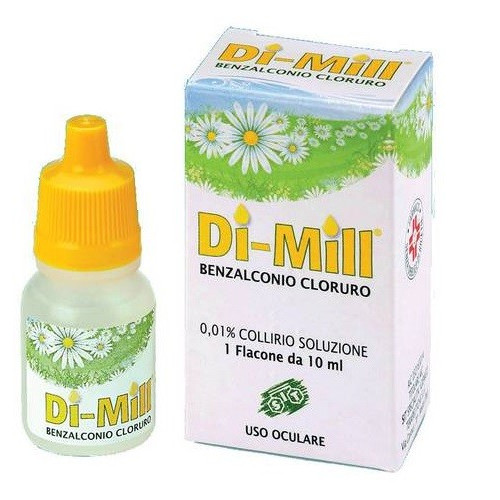
Descrizione Clinica
Eye Drops Brunistill coll20fl 0.5ml0,025
BRUNISTILL 0.025% COLLIRIA, SOLUTION
active ingredients
One 0.5 ml single-dose container contains: Active ingredient: ketotifene 125 mcg (as hydrogen smoked), equal to 250 mcg/ml For excipients see 6.1.Excellent
Glicerol (E422) Sodium Hydroxide Purified Water.Therapeutic indications
BRUNISTILL is indicated in the symptomatic treatment of seasonal allergic conjunctivitis.Contraindications
Hypersensitivity to the active ingredient ketotifene or any of the excipients listed in the paragraph 6.1.Population
Adults, elders and children (over 3 years): a drop of colliery in the joint sack twice a day. The contents of a single-dose container is sufficient for administration in both eyes. Content and container remain sterile until the original closure is opened. To avoid the risk of contamination do not touch any surface with the tip of the container.Conservation
Store at a temperature not exceeding 25°C.Warnings
No special precautionsInteractions
If you are making use of other eye medications, you should let it take at least 5 minutes between one application and the other. Oral administration of ketotifen can enhance the effects of depressing drugs SNC, antihistamines and alcohol. Although these phenomena have not been observed with BRUNISTILL, the possibility of such effects cannot be excluded.Effects
The following side effects were reported at the recommended dose. The frequency listed below is defined by the following convention: very common (≥1/10), common (from ≥1/100,Overdosing
There were no overdose cases. Oral intake of the content of a single dose would be equivalent to 0.1 mg of Ketotifene, equivalent to 5% of a daily oral dose recommended for a 3-year-old. Clinical results have not indicated severe signs or symptoms after ingestion of a dose of up to 20 mg of ketotifene.No clinical data are available on the use of BRUNISTILL pregnant. Animal studies with toxic oral doses showed an increase in pre- and postnatal mortality, but did not show teratogenic effects. Systemic levels of ketotifene after ophthalmic application are much lower than those achieved after oral administration. You should however use caution in prescribing the medicine to pregnant women. Although data from studies on consecutive oral administration animals demonstrate the excretion of the active ingredient in breast milk, it is unlikely that the topical administration in the woman can produce an active substance quantity detectable in breast milk. Mothers using BRUNISTILL colliery can then breastfeed.
Source: Farmadati