Descrizione Clinica
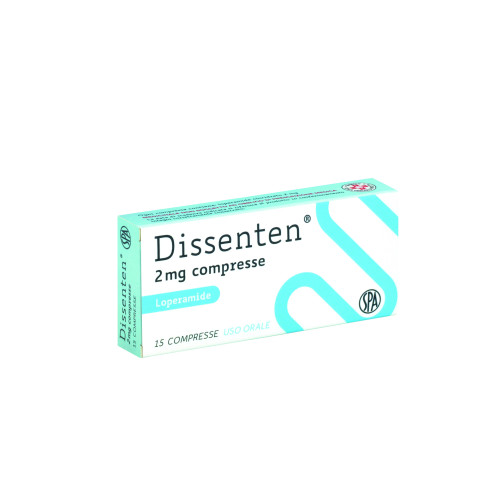
LOPERAMI DOC GENERICI 2 MG COMPRESENT
active ingredients
Each tablet contains 2 mg of loperamide (such as loperamide hydrochloride). Excipient with known effect: lactose monohydrate. For the full list of excipients, see paragraph 6.1.Excellent
Magnesium stearate, corn starch, lactose monohydrate, microcrystalline cellulose.Therapeutic indications
Generic LOPERAMIDE DOC is indicated in the treatment of acute diarrhee.Contraindications
• Hypersensitivity to the active ingredient or any of the excipients listed in paragraph 6.1. • Generic LOPERAMIDE DOC should not be used in children under 2 years of age. • Generic LOPERAMIDE DOC should not be used as primary therapy: - in patients with acute dysentery, characterized by blood in the feces and high fever - in patients with acute ulcerative colitis - in patients with bacterial enterocoliti caused by invasive organisms included Salmonella, , Shigella and Campilobacter - in patients with pseudomembranous colitis associated with the use of broad spectrum antibiotics. Generic LOPERAMIDE DOC should not be used when an inhibition of peristalsis should be avoided due to the possible risk of significant consequences including ileo, megacolon and toxic megacolon. Treatment with Generic LOPERAMIDE DOC should be immediately interrupted when constipation, abdominal distension or ileo occur.Population
Population Adults and children aged between 6 and 17 The tablets should be taken with a little liquid. Acute diarrhea: the initial dose is 2 tablets (4 mg) for adults and 1 tablet (2 mg) for children; 1 tablet (2 mg) after each subsequent evacuation of unformed feces (molli). Chronic diarrhea: the initial dose is 2 tablets (4 mg) for adults and 1 tablet (2 mg) for children per day; this initial dose should be adapted until you obtain 1-2 solid evacuations per day, which are generally reached with a maintenance dose of 1-6 tablets (2 mg -12 mg) per day. The maximum daily dose for chronic and acute diarrhea is 8 tablets (16 mg) per day for adults; in children the dose should be related to body weight (3 tablets/20 Kg) but should not exceed a maximum of 8 tablets per day. Children under 2 years old Generic LOPERAMIDE DOC should not be used in children under 2 years of age. Seniors In the elderly, dose adjustment is not necessary. Renal Compromise In patients with renal impairment, dose adjustment is not necessary. Epathetic Comprogation Although there is no pharmacokinetic data available in patients with hepatic impairment, Generic LOPERAMIDE DOC should be used with caution in these patients due to reduced first-pass metabolism (see paragraph 4.4 “Special warnings and precautions of use).Conservation
This medicine does not require any special condition of conservation.Warnings
The treatment of diarrhea with LOPERAMIDE DOC Generic is only symptomatic. Whenever a basic etiology can be determined, specific treatment should be given when appropriate. In patients with diarrhea, especially in children, a depletion of fluids and electrolytes may occur. In these cases, the most important countermeasure is the administration of adequate replacement therapy based on liquids and electrolytes. Generic LOPERAMIDE DOC should not be administered in children between 2 and 6 years of age without prescription and medical supervision. In acute diarrhea, if there is no improvement in clinical symptoms within 48 hours, the administration of Generic LOPERAMIDE DOC should be interrupted and patients should be advised to consult the doctor. Patients with AIDS treated with Generic LOPERAMIDE DOC for diarrhea must suspend therapy at the first signs of abdominal distension. In these patients with infectious colitis caused by viral and bacterial pathogens, treated with loperamide hydrochloride, there were isolated cases of stipsis with an increase in the risk of toxic megacolons. Although no pharmacokinetic data is available on patients with liver impairment, LOPERAMIDE DOC Generic must be used with caution in these patients due to reduced first-pass metabolism. Patients with liver dysfunction must be carefully monitored for signs of toxicity to the central nervous system (SNC). In association with overdose, heart events were reported including the extension of the QT range and the QRS complex, point torsion. Overdose can make the presence of Brugada syndrome manifest. Some cases were fatal (see paragraph 4.9). Patients should not exceed the recommended dose and/or do not protract the duration of therapy. This medicine contains lactose Patients with rare hereditary problems of galactose intolerance, total lactase deficiency, or glucose-galactose mal absorption should not take this medicine. Treatment with loperamide should be suspended if there is no improvement in clinical symptomatology over the next 48 hours at the beginning of therapy and patients should consult their physician.Interactions
Possible interactions can occur with drugs having pharmaceutical properties similar to those of loperamide or drugs that can slow the intestinal peristalsis (e.g. anticholinergics), as the effects of loperamide could be enhanced. Substances that accelerate gastrointestinal transit may decrease the effect. We do not recommend the concomitant use of cytochrome inhibitors CYP450 and P-glycoprotein inhibitors. Non-clinical data have shown that loperamide is a substrate of P-glycoprotein. Concurrent administration of loperamide (in a single dose of 16 mg) with chinidine, or ritonavir, both P-glycoprotein inhibitors, showed an increase in plasma levels of loperamide 2 to 3 times. The clinical relevance of this drug interaction with P-glycoprotein inhibitors, when loperamide is administered at recommended doses (from 2 to a maximum of 16 mg per day), is not known. Concurrent administration of loperamide (in a single dose of 4 mg) and itraconazole, an inhibitor of CYP3A4 and P-glycoprotein showed an increase in plasma levels of loperamide 3-4 times. In the same study the gemfibrozil, a CYP2C8 inhibitor showed an increase in plasma levels of loperamide by about 2 times. The combination of itraconazole and gemfibrozil showed an increase in plasma levels of loperamide 4 times and an increase in total plasma exposure of 13 times. These increments were not associated with the effects on the central nervous system (SNC) as detected by psychomotor tests (e.g. subjective dizziness and the Digit Symbol Substitution Test). Concurrent administration of loperamide (in a single dose of 16 mg) and ketoconazole, a CYP3A4 inhibitor and P-glycoprotein showed an increase in plasma levels of loperamide 5 times. This increase was not associated with an increase in pharmacodynamic effects as detected by the pupillometry. Concurrent treatment with oral desmopressin was an increase in plasma desmopressin concentrations of 3 times, presumably due to a slow gastrointestinal motility. It is expected that drugs with similar pharmacological properties can enhance the effect of loperamide and that medicines that accelerate gastrointestinal transit may decrease this effect.Effects
Adults and children aged ≥12 years The safety of loperamide was assessed in 3076 adult subjects and children aged ≥12 years who took part in 31 controlled and uncontrolled clinical studies with loperamide hydrochloride used for treating diarrhea. Of these, in 26 studies it was acute diarrhea (N=2755) and in 5 chronic diarrhea (N=321). The most commonly reported adverse reactions to the drug (ADR) (i.e. with an incidence ≥1%) in clinical studies with loperamide for the treatment of acute diarrhea were as follows: stipsi (2.7%), flatulence (1.7%), headache (1.2%) and nausea (1.1%). In clinical studies to treat chronic diarrhea, the most commonly reported ADRs (i.e., ≥1% of incidence) were as follows: flatulence (2.8%), stipsi (2.2%), nausea (1.2%) and dizziness (1.2%). Table 1 presents the results of 3076 adult subjects and children aged ≥12 years who took part in 31 controlled and uncontrolled clinical trials with loperamide hydrochloride used for treating diarrhea. Of these, in 26 studies it was acute diarrhea (N=2755) and in 5 chronic diarrhea (N=321). The frequency categories presented in Table 1 use the following convention: very common (≥1/10); common (≥1/100 up toOverdose
Synonyms In case of overdose (including hepatic dysfunction), depression of the SNC may occur (stepper, coordination abnormalities, drowsiness, myosis, muscle hypertonia and respiratory depression) ileum and urinary retention. Children can be more sensitive to the effects of the central nervous system than adults. Therefore it is recommended to keep the product out of their reach because an accidental ingestion, especially in children under 4 years for absolute overdose (intentional intake of excessive doses) or relative (for accumulation in the blood of non metabolized drug, while administered at the correct doses), can cause stipsis and depression of the central nervous system with drowsiness and slowing of the breath. In this case the patient must be kept under careful observation for 48 hours. Treatment Measures in case of overdose: gastric lavender, vomiting induction, clisma or laxative administration. In subjects with excessive doses of loperamide, cardiac events such as the extension of the QT range and that of the QRS complex, point torsion, other severe ventricular arrhythmias, cardiac arrest and syncope (see paragraph 4.4) were observed. Fatal cases have also been reported. Overdose can make the presence of Brugada syndrome manifest. If overdose symptoms arise, naloxone can be administered as an antidote. Since the duration of loperamide action is more extensive than that of naloxone (from 1 to 3 hours), repeated treatment with naloxone may be indicated. Therefore, the patient must be monitored carefully for at least 48 hours, in order to detect a possible depression of the SNC.Pregnancy
Although there are no indications that loperamide hydrochloride possesses teratogenic or embryotoxic properties, the therapeutic benefits expected must be assessed compared to the potential risks before administering LOPERAMIDE DOC Generic during pregnancy, especially during the first quarter.Food
Small amounts of loperamide can appear in human breast milk. Therefore Generic LOPERAMIDE DOC is not recommended during breastfeeding.Source: Farmadati