Descrizione Clinica
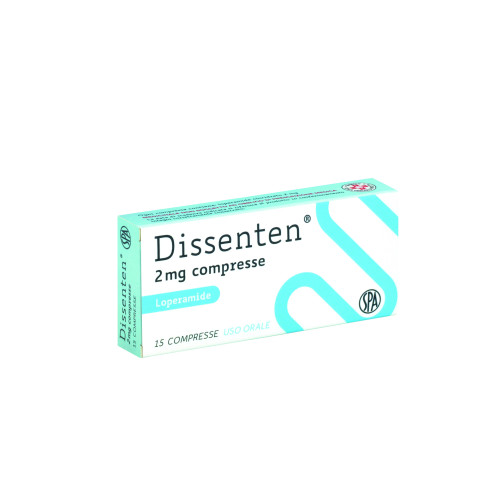
Diarrea Imodium 12cps soft 2mg Imodium
IMODIUM
active ingredients
A rigid capsule contains: Active ingredient: Loperamide Hydrochloride 2 mg. An orosoluble tablet contains: Active ingredient: Loperamide Hydrochloride 2mg. A soft capsule contains: Active ingredient: Loperamide Hydrochloride 2mg. Excipients with known effects IMODIUM 2 mg rigid capsules: lactose 127 mg. IMODIUM 2 mg orosoluble tablets: each tablet contains 750 micrograms of aspartame; mint aroma contains traces of sulphites. IMODIUM 2 mg soft capsules: each soft capsule contains 115.31 mg propylene glycol. For the full list of excipients, see paragraph 6.1. For the full list of excipients, see paragraph 6.1.Excellent
IMODIUM 2 mg rigid capsules: lactose, corn starch, talc, magnesium stearate. A rigid green-grey capsule consists of: erythrosine (E 127); indigotin (E 132); yellow iron oxide (E 172); black iron oxide (E 172); titanium dioxide and gelatin IMODIUM 2 mg orthodox tablets: jelly, mannitol, aspartame, mint aroma, baking sodium. IMODIUM 2 mg soft capsules: monocaprilate of propilenglycol, propilenglycole, distilled water. One capsule consists of: gelatin, glycerol 99%, propylenglycol, FD&C blue n. 1.Therapeutic indications
IMODIUM is indicated for the symptomatic treatment of acute diarrhee.Contraindications
Hypersensitivity to the active ingredient or any of the excipients listed in paragraph 6.1. Children under 6. Pregnancy and nursing (see section 4.6 “Gravidance and nursing”) IMODIUM • in patients with acute ulcerative colitis or pseudomembranous colitis due to the use of broad spectrum antibiotics; • in patients with bacterial enterocolitis caused by invasive organisms including Salmonella, Shigella and Campylobacter. In general, the use of HCl loperamide is contraindicated in all cases where an inhibition of peristalsis must be initiated due to the possible risk of significant consequences such as ileo, megacolon and toxic megacolon.Population
Population Adults The initial dose is 2 rigid capsules or 2 soft capsules or 2 orosoluble tablets (4 mg). Continue treatment with 1 capsule or 1 tablet (2 mg), after each subsequent evacuation of unformed feces (molli). The maximum daily dose is 8 capsules or tablets per day (16 mg). Special popularity Children aged between 6 and 17 (see paragraph 4.3) The initial dose is 1 rigid capsule or 1 soft capsule or 1 orosoluble tablet (2 mg). Continue treatment with 1 capsule or 1 tablet (2 mg), after each subsequent evacuation of unformed feces (molli). The maximum daily dose in children must be established according to body weight (3 capsules or tablets/20 Kg), but should not exceed the maximum of 8 capsules or tablets per day (16 mg). The data available for the use of HCl loperamide in children under 12 years of age are limited (see paragraph 4.8 “Unwanted Effects”). Seniors In the elderly, dose adjustment is not necessary. Compromise of kidney function In patients with impairment of kidney function, dose adjustment is not required. Compromise of liver function Although data is not available in patients with impairment of liver function, loperamide HCl must be used with caution in these patients due to reduced first-pass metabolism (see paragraph 4.4 “Special warnings and precautions of use”). Method of administration IMODIUM 2 mg rigid capsules/2 mg soft capsules: take by mouth with a little water. IMODIUM 2 mg orosoluble tablets: let melt the tablet on the tongue for a few seconds; the tablet will be dissolved quickly by the saliva. It does not require water. Attention : Do not use for more than 2 days. Interrupt in any case the treatment to the normalization of the feces, or if you no longer have intestinal movements from 12 hours, or if it appears constipation. In acute diarrhea, loperamide HCl is generally able to stop symptoms within 48 hours. After this period without appreciable results, stop treatment and consult your doctor.Conservation
Store the medicine at a temperature not exceeding 25°C.Warnings
The treatment of diarrhea with HCl loperamide is only symptomatic. Therefore, where possible, it is also appropriate to intervene on the causes of the disorder. In episodes of acute diarrhea loperamide HCl is generally able to stop symptoms within 48 hours; spent this period without appreciable results, treatment must be stopped and the patient must be advised of the need to go to the doctor for a consult. In patients with diarrhea, especially in children, an important loss of liquids and electrolytes may occur. In such cases it may be very important to properly reintegrate the liquids and electrolytes themselves. Although no pharmacokinetic data is available in patients with liver dysfunction, loperamide HCl must be used with caution in these patients due to the intense first-pass metabolism. The drug must be used with caution in patients with liver failure as it can lead to a relative overdose with toxicity at the expense of the SNC. Patients with AIDS treated with HCl loperamide for diarrhea, must stop therapy at the first signs of abdominal distension. In these patients with infectious colitis of bacterial or viral origin, treated with HCl loperamide, there have been isolated cases of intestinal obstruction with an increased risk of toxic megacolons. If the constipation or abdominal distension or the ileo immediately cease treatment. Cases of misuse and misuse of loperamide have been reported, used as a substitute for opioids, in individuals with dependence on such substances (see paragraph 4.9). Heart events have been reported including the extension of the QT and the QRS complex and point twists in association with overdose. Some cases were fatal (see paragraph 4.9). Overdose can make the presence of Brugada syndrome manifest. Patients should not exceed the recommended dose and/or do not protract the duration of therapy. Pediatric population In children between 6 and 12 years, IMODIUM must be used exclusively under medical control. The data available for the use of HCl loperamide in children under 12 years of age are limited (see paragraph 4.8 “Unwanted Effects”). Important information about some excipients IMODIUM 2 mg rigid capsules contains lactose. Patients with rare hereditary problems of galactose intolerance, total lactase deficiency, or glucose-galactose mal absorption, should not take this medicine. IMODIUM 2 mg orosoluble tablets contains: • tracks sulphites. Sulphites rarely can cause severe hypersensitivity and bronchospasm reactions. • 0.750 mg of aspartame per single dose which is equivalent to 0.011 mg/kg for an adult of 70 kg and 0.038 mg/kg for a child of 20 kg. Aspartame is hydrolyzed in the gastrointestinal tract when taken orally. One of the major products of its hydrolysis is phenylalanine. Clinical and non-clinical data are not available to evaluate the use of aspartame in infants under 12 weeks. • less than 1 mmol (23 mg) of sodium for single dose. It can therefore be considered essentially devoid of sodium. • 0,00066 mg of benzyl alcohol per single tablet. Benzyl alcohol can cause allergic reactions. It is possible that the accumulation of large amounts of benzyl alcohol can cause metabolic acidosis; use with caution and only if necessary, especially in patients with liver or kidney failure. • 0,00003 mg of alcohol (ethanol) in each tablet. The amount in ethanol of this medicine is equivalent to less than 0.00000075 ml of beer or 0.0000003 of wine. This medicine contains an amount of ethanol that does not produce significant effects. IMODIUM 2 mg soft capsules contains: • 115,31 mg propylene glycol. 115,31 mg of propylene glycol for single dose, equivalent to 1,65 mg/kg for an adult of 70 kg and 5,77 mg/kg for a child of 20kg; • less than 1 mmol (23 mg) of sodium for single dose. It can therefore be considered essentially devoid of sodium.Interactions
Non-clinical data have shown that loperamide is a substrate of glycoprotein P. Concurrent administration of loperamide (in a single dose of 16 mg) with chinidine or ritonavir (both glycoprotein inhibitors P) showed increases in plasma levels of loperamide 2 to 3 times. The clinical relevance of this drug interaction with glycoprotein inhibitors P, when loperamide is administered at recommended doses (from 2 to a maximum of 16 mg per day) is unknown. Concurrent administration of loperamide (in a single dose of 4 mg) and itraconazole, an inhibitor of CYP3A4, and glycoprotein P, showed an increase in plasma levels of loperamide 34 times. In the same study the gemfibrozil, a CYP2C8 inhibitor showed an increase in plasma levels of loperamide 2 times. The combination of itraconazole and gemfibrozil showed an increase in the plasma level peak of loperamide 4 times and an increase in total plasma exposure of 13 times. These increments were not associated with the effects on the central nervous system (SNC) as detected by psychomotor tests (e.g. subjective dizziness and the Digit Symbol Substitution Test). Concurrent administration of loperamide (in a single dose of 16 mg) and ketoconazole, a CYP3A4 inhibitor, and glycoprotein P, showed an increase in plasma levels of loperamide 5 times. This increase was not associated with an increase in pharmacodynamic effects as detected by the pupillometry. Concurrent treatment with oral desmopressin was an increase in plasma desmopressin concentrations of 3 times, presumably due to a slow gastrointestinal motility. We do not recommend the concomitant use of cytochrome inhibitors CYP450. Substances accelerating gastrointestinal transit may decrease the effect of IMODIUM. Pharmacies with pharmaceutical properties similar to those of loperamide or drugs that can slow down intestinal peristalsis (e.g. anti-linergic), can increase the effect of IMODIUM.Effects
Adults and children aged ≥ 12 years Reactions reported in clinical trials with loperamide HCl The safety of Loperamide HCl was assessed in 3076 adult subjects and children aged ≥12 years who took part in 31 controlled and uncontrolled clinical trials with loperamide HCl used for treating diarrhea. Of these, in 26 studies it was acute diarrhea (N=2755) and in 5 chronic diarrhea (N=321). The most commonly reported adverse reactions to the drug (ADR) (i.e. with an incidence ≥1%) in clinical trials with Loperamide HCl for treating acute diarrhea were as follows: stipsi (2.7%), flatulence (1.7%), headache (1.2%) and nausea (1.1%). In clinical studies to treat chronic diarrhea, the most commonly reported ADRs (i.e. ≥1% of incidence) were as follows: flatulence (2.8%), stipsi (2.2%), nausea (1.2%) and dizziness (1.2%). Table 1 shows ADRs that have been reported using HCl loperamide in clinical trials (in case of acute or chronic diarrhea) in adults and children aged ≥ 12 years. The frequency of adverse reactions in Table 1 and Table 2 shall be defined by the following Convention: Very common (≥1/10); Common (≥1/100 up to Table 1: Reactions reported with the use of loperamide HCl in clinical trials in adults and children aged ≥ 12 years| Classification for systems and organs | Indication | |
| Acute diarrhea | Chronic diarrhea | |
| (N=2755) | (N.321) | |
| Diseases of the nervous systemCefa | Town | Not common |
| Chief Minister | Not common | Town |
| Gastrointestinal diseases Stipsi, Nausea, Flatulenza | Town | Town |
| Abdominal pain, Abdominal disease, Dry mouth | Not common | Not common |
| Pain at the top of the abdomen, Vomito | Not common | |
| Dispepsia | Not common | |
| Abdominal distension | Rare | |
| Pathology of skin and subcutaneous tissue Skin rash | Not common | |
| Classification for systems and organs | Indication Acute diarrhea + Chronic diarrhea |
| Disorders of the immune system | hypersensitivity reaction, anaphylactic reaction (including anaphylactic shock), anaphylactic reaction |
| Disorders of the nervous system | drowsiness, loss of consciousness, numbness, reduction of consciousness level, hypertonia, coordination disorders |
| Pathologies of the eye | mysteries |
| Gastrointestinal diseases | ileo (including paralytic ileo), megacolon (including toxic megacolon), acute pancreatititis glossodinia (non-known frequency) |
| Pathologies of skin and subcutaneous tissue | bollous eruption (including Stevens-Johnson syndrome, toxic epidermal necrolysis and multiform erythema), angioedema, hives, itching |
| Kidney and urinary pathologies | urinary retention |
| Systemic pathologies and conditions for administration | fatigue |
Overdosing
Synonyms In case of overdose (absolute, for accidental intake of excessive or relative doses, for accumulation in the blood of the non metabolized drug, while administered at the correct doses), including an overdose related to liver dysfunction, can manifest depression of the SNC (torpore, disorderly movements, drowsiness, muscle hypertonia, respiratory depression), intestinal occlusion and urinary retention. In patients who have ingested excessive doses of loperamide, cardiac events have been observed such as extension of the QT range and QRS complex, point torsion, other severe ventricular arrhythmias, cardiac arrest and syncope (see paragraph 4.4). Fatal cases have also been reported. Overdose can make the presence of Brugada syndrome manifest. Children are more sensitive than adults to the effects of overdose from IMODIUM. Therefore it is recommended to keep the product outside of their reach because an accidental ingestion, especially in children under 4 years, can cause stipsis and depression of the central nervous system with drowsiness and slowing breathing. Treatment In case of overdose, ECG monitoring must be initiated for extension of the QT range. Urgent measures: if overdose symptoms appear, naloxone can be used as an antidote; administer naloxone and possibly repeat the treatment after 1-3 hours as loperamide has a longer duration than the antidote. The patient must be monitored for at least 48 hours to highlight a possible aggravation of the depression of the central nervous system.The administration of IMODIUM is contraindicated during pregnancy and nursing. Pregnant or breast-feeding women should therefore be advised of the need to consult the doctor for the most appropriate treatment.
Source: Farmadati