Descrizione Clinica
DERMAIN
Description
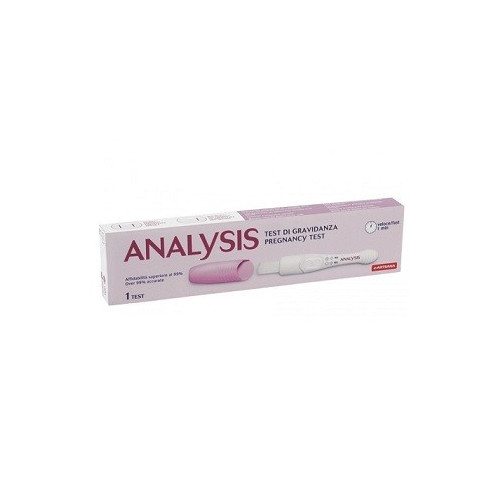
Self-diagnostic pregnancy test.
The rapid pregnancy test is a rapid test in a single phase for the qualitative detection of human chorionic gonadotropin (hCG) in the urine, as an aid for early pregnancy diagnosis. The test is intended for autodiagnosis in vitro.
Chorionic gonadotropin (hCG) is a placenta hormone produced shortly after conception and secreted in urine. The pregnancy test contains antibodies that react specifically with this hormone. When the urine sample comes into contact with the absorbent tip of the test, a capillary action carries the sample along the membrane. When the hCG in the sample reaches the membrane test zone, a colored line will be formed. The absence of this colored line suggests a negative result. As verification, a colored line will appear in the control area, if the test has been performed correctly.
Mode of use
Let the test cassette and urine samples balance at room temperature (20-30 °C) before testing.
1. Remove the test stick from the aluminum stick by tearing the notch and remove the cap from the test stick.
2. To perform the test, rotate the stick so that the absorbent tip is turned down and hold the stick in the urine flow so that the urine comes into contact with the absorbent area.
Place it for at least ten seconds so that the urine enters sufficiently into the absorbent part of the tip. Don't let the urine splash in the results window.
3. Close the stick of the pregnancy test and place it on a horizontal surface with the result window facing up.
4. Wait for the appearance of red lines. The test should be read in about 3-5 minutes. Do not interpret the results after the specified reaction time.
Reading results
Positive: two distinct red lines will appear, one in the test region (T) and one in the control region (C). The positive results of the test are possible, but not definitive for the diagnosis of pregnancy. It is highly recommended to obtain an additional urine sample after 48-72 hours and to test again, or consult your physician.
Negative: a single red line appears in the control region (C). In the test region (T) there is no apparent red or pink line. The negative results of the test mean that you are not pregnant, however you need to repeat the test with the first morning sample obtained 48-72 hours later.
Not valid: the control band does not appear, which means that non-correct analysis procedures or deterioration of reagents have probably occurred. Either way, repeat the test. If the problem persists, stop the use of the lot immediately and contact the local distributor.
Warnings
1. Only for in vitro diagnostic use.
2. Do not use after the expiry date.
3. The reactive strip must remain in the sealed envelope until use. Do not use if the envelope is damaged or open.
4. Carefully read instruction for use before testing. Avoid skin contact, eyes or clothing with the test area.
5. As with all diagnostic tests, the confirmed pregnancy diagnosis must be carried out by a doctor only after evaluating all clinical and laboratory results.
6. Do not reuse the reactive strip. Drop it after only one use.
7. All urine samples and the strip used should be considered potentially infectious and avoid contact with the skin.
8. To comply with local regulations to dispose of the tests used.
9. Only for external use, do not swallow.
Limitation
1. As with any diagnostic procedure, the diagnosis of confirmed pregnancy should only be made by a doctor after evaluating all clinical and laboratory results.
2. If a urine sample is too diluted (i.e. with a low specific weight) it may not contain a representative level of hCG. If you suspect a pregnancy again, you must collect another urine sample 48 hours later and analyze it.
3. A low concentration of hCG in a very early pregnancy can give a negative result. In this case, you must collect another sample at least 48 hours later and analyze it.
4. High levels of hCG can be caused by certain conditions other than pregnancy. Therefore, the presence of hCG in a urine sample should not be used to diagnose pregnancy unless these conditions have been excluded.
5. A normal pregnancy cannot be distinguished from an ectopic pregnancy on the basis of only hCG levels. In addition, miscarriage may cause confusion in interpreting test results.
6. Treatments for sterility, based on hCG, can cause incorrect results. Consult your doctor for further diagnosis.
7. This test is a qualitative screening test. It is not designed to determine the quantitative concentration of hCG.
8. The device is only suitable for human urine testing.
9. Pussy samples or pollutants in the urine can cause false results.
10. An unclean test device or incorrect operation can cause false results.
Conservation
Store the kit as packaged in the sealed envelope at room temperature (4-30°C).
The kit is stable by the expiry date on the label.
Once the envelope is opened, the reactive strip must be used within an hour. Prolonged exposure to environmental moisture, causes product deterioration.
Don't freeze. Keep away from direct sunlight, moisture and heat.
Don't reuse.
Preferably open the bag just before carrying out the test.
Cod. 221