Descrizione Clinica
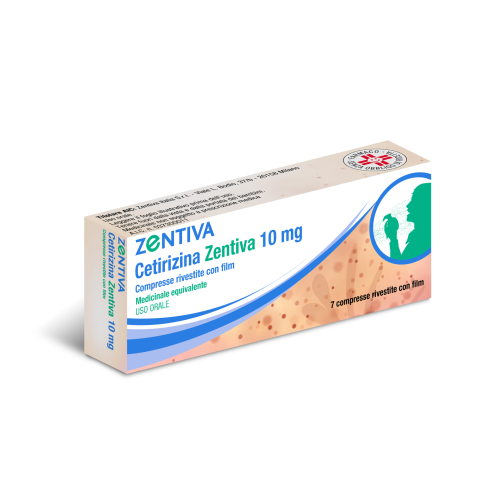
Antihistamines Zirtec 7cpr riv 10mg
ZIRTEC 10 MG FILM-COATED TABLETS
active ingredients
Each tablet coated with film contains 10 mg of cetirizine dichloride. Excipients with known effects: Each film-coated tablet contains 66.40 mg of lactose monohydrate. For the full list of excipients, see paragraph 6.1.Excellent
- Cellulose microcrystalline - Lactose monohydrate - Silice anidra colloidal - Magnesium stearate - Opadry Y-1-7000 which consists of: - Hydroxypropylmethylcellulose (E 464) - Titanium oxide (E 171) - Macrogol 400.Therapeutic indications
10 mg cetirizine tablets coated with film are indicated in adults and pediatric patients aged 6 years: - for the treatment of nasal and eye symptoms of seasonal and perennial allergic rhinitis. - for symptomatic treatment of idiopathic chronic hives.Contraindications
Hypersensitivity to the active ingredient, to any of the excipients listed in paragraph 6.1, to hydroxyzine or to any derivative of piperazine. Patients with kidney disease in terminal phase with eGFR (Estimate Glomerular Filtration Speed) less than 15 ml/min.Population
Population 10 mg once a day (1 tablet). Special popularity Seniors On the basis of the available data, in elderly individuals with normal kidney function no reduction of the dose is necessary. Renal Compromise There are no available data that documents the effectiveness/security ratio in patients with renal impairment. Since cetirizine is mainly excreted by renal (see paragraph 5.2), in cases where alternative treatments cannot be used, the interval between doses must be identified according to kidney function. Refer to the following table and establish the dose as indicated. Dose adjustments in adult patients with renal impairment| Group | Estimated Glomerular Filtration Speed eGFR)(mL/min) | Dose and frequency |
| Normal kidney function | ≥90 | 10 mg once a day |
| Low renal functionality compromise | 60 - | 10 mg once a day |
| Moderate compromise of renal functionality | 30 - | 5 mg once a day |
| Severe impairment of kidney function | 15- | 5 mg once every 2 days |
| Terminal phase of kidney disease | Contraindicated |
Conservation
This medicine does not require any special condition of conservation.Warnings
At therapeutic doses, clinically significant interactions with alcohol were not highlighted (for blood levels of 0.5 g/l). However, caution is recommended in case of concomitant alcohol intake. Caution should be given in patients with urinary retention factors (such as spinal cord injury, prostatic hyperplasia) since cetirizine may increase the risk of urinary retention. Caution is recommended in epileptic patients and patients at risk of seizures. The response to skin tests for allergy is inhibited by antihistamines and a wash-out period (of 3 days) is required before performing them. Patients with rare hereditary problems of galactose intolerance, total lactase deficiency, or glucose-galactose mal absorption, should not take this medicine. Itching and/or hives may occur when the treatment with cetirizine is interrupted, even if such symptoms were not present before the start of treatment. In some cases, symptoms can be intense and you may need to start treatment again. Symptoms should resolve when you start treatment again. Pediatric population The use of the formulation in tablets coated with film is not recommended in children under 6 years of age, since this formulation does not allow an appropriate adaptation of the dose. It is recommended to use a pediatric formulation of cetirizine.Interactions
For the pharmacokinetic, pharmacodynamic and tolerability profile of cetirizine, there are no interactions with this antihistamine. In drug-pharmaceutical interaction studies, in fact, no significant pharmacodynamic interactions or pharmacocinetic interactions have been reported, particularly with pseudophedrine or theophylline (400 mg/day). The degree of absorption of cetirizine is not reduced by food intake, although the absorption rate is decreased. In sensitive patients, the simultaneous intake of cetirizine with alcohol or other substances with depressing action on SNC may cause further decrease in the state of alertness and alteration of performance, although cetirizine does not enhance the effect of alcohol (0,5 g/L of blood levels).Effects
Clinical studies • General Clinical studies have shown that cetirizine at the recommended dosage has minor side effects at SNC level, which include drowsiness, fatigue, dizziness and headache. In some cases, paradox stimulation of the SNC was reported. Although cetirizine is a selective antagonist of H receptors1 peripheral and relatively devoid of anti-linergical activity, isolated cases of difficulty in urination, disturbances of visual accomodation and dry mouth have been reported. Anomalous hepatic function has been reported with elevated hepatic enzyme levels accompanied by high bilirubin, most of which solved following discontinuation of treatment with cetirizine dichloride. • List of adverse reactions In the context of double-blind controlled clinical trials, in which cetirizine was compared to placebo or other antihistamines at the recommended dose (10 mg per day per cetirizine), for which there are quantitative safety data, more than 3200 subjects have been exposed to cetirizine. Based on this data, the following adverse reactions with an incidence equal to or greater than 1.0% with cetirizine 10 mg were reported in placebo tests:| Adverse reactions (WHO-ART) | Cetirizina 10 mg (n= 3260) | Placebo (n = 3061) |
| General pathologies and conditions for administration | ||
| Fatigue | 1.63% | 0,95% |
| Diseases of the nervous system | ||
| Heads | 1.0% | 0,98% |
| Cefa | 7,42% | 8,07% |
| Gastrointestinal diseases | ||
| Abdominal pain | 0,98% | 1,08% |
| Dry mouth | 2,09% | 0,82% |
| Nausea | 1,07% | 1.4% |
| Psychiatric disorders | ||
| Sleep | 9,63% | 5,00% |
| Respiratory, chest and mediastinic pathologies | ||
| Pharisees | 1.29% | 1.34% |
| Adverse reactions (WHO-ART) | Cetirizina (n=1656) | Placebo (n =1294) |
| Gastrointestinal diseases | ||
| Diarrea | 1.0% | 0,6% |
| Psychiatric disorders | ||
| Sleep | 1.8% | 1.4% |
| Respiratory, chest and mediastinic pathologies | ||
| Rehabilitation | 1.4% | 1.1% |
| General pathologies and conditions for administration | ||
| Fatigue | 1.0% | 0.3% |
Overdosing
Synonyms Symptoms observed as a result of a cetirizine overdose are mainly associated with effects on the central nervous system or effects that may suggest anti-linergic activity. As a result of taking a dose of at least 5 times the recommended daily dose, the following adverse events were reported: confusion, diarrhea, dizziness, fatigue, headache, malaise, midriasis, itching, restlessness, sedation, drowsiness, astonishment, tachycardia, tremor and urinary retention. Treatment A specific antidote to cetirizine is not known. In case of overdose, symptomatic or support treatment is recommended. The gastric lavender can be taken into account in the event that a short time has passed since the ingestion of the medicinal product. Cetirizine is not effectively removed for hemodilysis.Pregnancy
Perspective data collected for cetirizine on pregnancy outcomes do not suggest a potential toxicity for the mother or for the fetus/embry above the basic values. Animal studies show no direct or indirect harmful effects regarding pregnancy, embryo/fetal development, childbirth or post-natal development. Prescription to pregnant women must be done with caution.Food
Cetirizina passes into breast milk. It is not possible to exclude a risk of undesirable effects in infants breast milked. Cetirizine is excreted in breast milk at concentrations representing 25% to 90% of those measured in plasma, depending on the sampling time after administration. Therefore the prescription to nursing women must be carried out with caution.Fertility
Limited human fertility data are available, but safety issues have not been identified. Animal data shows no safety issues for human reproduction.Source: Farmadati