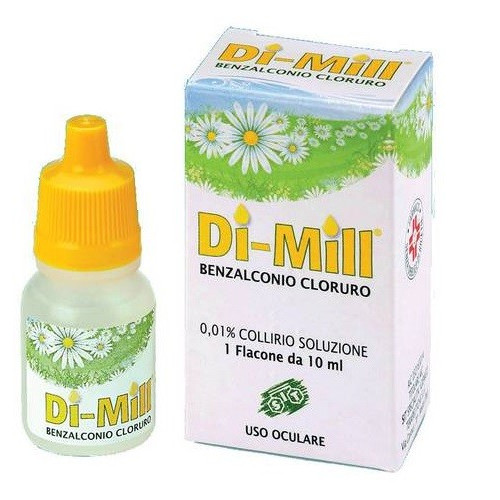
Descrizione Clinica
Eye Drops Reluviz Coll 25fl 0.5ml
RELUVIZ COLLIRIZ
active ingredients
A ml contains 0.345 mg of ketotifene hydrogen smoked corresponding to 0.25 mg of ketotifene. Excipient with known effects: This medicine in the multidose container contains 0.05 mg/ml of benzalconio chloride. For the full list of excipients, see paragraph 6.1.Excellent
Multi-dose Hill: Glicerolo; Hydroxide sodium (for pH regulation); Water for injectable preparations; Benzalconio chloride. Collirio monodose: Glicerolo; Hydroxide sodium (for pH regulation); Water for injectable preparations.Therapeutic indications
Syntomatic treatment of seasonal allergic conjunctivitis.Contraindications
Hypersensitivity to the active ingredient or any of the excipients listed in paragraph 6.1.Population
Posology. Adults, elders and children (over 3 years): A drop of Reluviz in the joint sack twice a day. Children: The use of Reluviz is not recommended in children aged 3 or older for lack of clinical data. Method of administration: Ophthalmic use. Multi-dose bottle. The patient should be instructed to: 1. Wash your hands thoroughly before using the product. 2. Approach the end of the dropper to the eye, possibly helping with the mirror, avoiding touching the eye or eyelid or any surface with the tip of the dropper to avoid contaminating the solution. 3. Instill a drop in the eye, looking upwards and slightly lowering the lower eyelid, until forming a “draw” between the eyelid and the eye. 4. Close the eyelids and operate the nasolacrimal occlusion for 1-2 minutes. This will help reduce systemic absorption. 5. Wash your hands before repeating the procedure for the second eye if the eye should be used in both eyes. 6. Securely close the cap after use. Single-dose container. The patient should be instructed to: 1. Wash your hands thoroughly before using the product. 2. Open the aluminum envelope containing a strip (strip) of 5 single-dose containers and separate one for use. 3. Open the container, turning the cap completely around 360°. 4 Tilt the head backwards and gently lower with a finger the lower eyelid so as to form a pocket between the eyelid and the eye. 5. Place the tip of the single-dose container near the eye, without touching it to apply a drop of solution. 6. Close the eyelids and operate the nasolacrimal occlusion for 1-2 minutes. This will help reduce systemic absorption. 7. Wash your hands before repeating the procedure for the second eye if the eye should be used in both eyes. Reluviz monodose does not contain preservatives, once opened, must be thrown after use even in case of partial use. If a drop does not enter the eye, repeat the operation.Conservation
This medicine does not require any special conservation conditions. For conditions of conservation after the first opening of the medicinal product, see paragraph 6.3.Warnings
No special precaution. Please contact your doctor or pharmacist before taking this medication. Children and teenagers: This medicine should not be administered in infants and children under 3 years of age, due to the lack of clinical data. Reluviz colliery in multidose bottle contains benzalconio chloride: Reluviz collirio in multidose bottle contains the benzalconio chloride preservative that can be absorbed by soft contact lenses and can lead to change of their color. Therefore Reluviz colliery in multidose bottle should not be used if the patient wears this type of lens. The lenses must be removed before the application and it is necessary to wait 15 minutes before returning them. Chloride benzalconium can cause eye irritation, eye dryness, alteration of film and corneal surface. To be used with caution in patients with eye dryness and impairment of cornea. Patients should be monitored in case of prolonged use.Interactions
If Reluviz is used in conjunction with other eye medicines, at least 5 minutes must be taken between the application of the two medicines. Oral administration of ketotifen can enhance the effects of depressive drugs on SNC, antihistamines and alcohol. Although these phenomena have not been observed with collieries containing ketotifen, the possibility of such effects cannot be excluded.Effects
Adverse reactions are classified according to the frequency using the following convention: very common: (≥1/10), common: (≥1/100 a Immune disorders. Not common: Hypersensitivity. Nervous system pathologies. Not common: Kefalea. Pathologies of the eye. City: Eye irritation, eye pain, pointed keratite, episode erosion of the corneal epithelium; not common: Offused vision (during instillation), eye dryness, eyelid disorder, conjunctivitis, photophobia, conjunctive hemorrhage. Gastrointestinal disease. Not common: dry mouth. Pathologies of skin and subcutaneous tissue. Not common: rash, eczema, hives. Systemic pathologies and conditions for administration. Not common: Sleep. Adverse reactions from post-marketing experience (not known frequency). The following post-marketing events were observed: - hypersensitivity reactions including local allergic reactions (mostly contact dermatitis, swelling of the eyes, itching and edema of the eyelids), systemic allergic reactions, including swelling / edema of the face (in some cases associated with contact dermatitis) and exacerbation of pre-existing allergic conditions, such as as asthma and eczema; - chiefs. Reporting of suspicious adverse reactions: The reporting of suspicious adverse reactions that occur after the authorization of the medicinal product is important, as it allows continuous monitoring of the benefit/risk ratio of the medicinal product. Healthcare workers are required to report any suspected adverse reaction via the national reporting system at the address address http://www.aifa.gov.it/content/segnalazioni-reazioni-avverse.Overdosing
No overdose cases have been reported. Oral intake of the content of a 5 ml bottle is equivalent to 1.25 mg ketotifen, equal to 60% of a daily oral dose recommended for a 3-year-old. Clinical results have not indicated severe signs or symptoms after ingestion of a dose of up to 20 mg of ketotifene.Pregnancy:
There are or there are limited data on the use of colliary ketotifen in pregnancy. Animal studies with toxic oral doses showed an increase in pre- and post-natal mortality, but did not show teratogenic effects. Systemic levels after ocular administration are much lower than those after oral use. As a precautionary measure, it is preferable to avoid using Reluviz during pregnancy.Nursing:
Although the data of animal studies after oral administration demonstrate excretion in breast milk, it is unlikely that the topic administration of ketotifen in women can produce detectable quantities in breast milk. Reluviz collirio can be used during lactation.Fertility:
There is no data available on the effect of hydrogen ketotifen smoked on fertility.Source: Farmadati